
Hitachi Maru was a large Japanese passenger-cargo ship that was sunk in 1904 during the Russo-Japanese War after being attacked by the Vladivostok Cruiser Squadron of the Imperial Russian Navy. The incident resulted in more than 1,000 fatalities, and it is recorded as one of the most significant tragedies in modern Japanese history.
For a long time, the wreck’s precise location was unknown. In 2023, however, a BS-TBS(television) investigation discovered the wreck on the open-ocean seabed at a depth of around 80 meters. Because the site is in an offshore area exposed to strong currents and waves—and at a challenging depth—no full-scale diver-led research had been conducted prior to our expedition planning and subsequent dives.
In fiscal year 2025—a milestone year marking 120 years since the Russo-Japanese War and 80 years since the end of World War II—we decided to dive directly on this historic war-related site to document and verify its present condition. We believe this research is a valuable opportunity to clarify the circumstances of the sinking and the state of preservation, while also contributing to remembrance for those who died and to the protection of underwater cultural heritage.
Hitachi Maru was a large passenger-cargo ship owned and operated by Nippon Yusen Kaisha (NYK Line, 日本郵船), completed on August 16, 1898. It was the first Japanese-built merchant ship to exceed 6,000 gross tons, and it holds an important place in Japan’s shipbuilding history. After completion, she served on European routes, supporting international passenger and cargo transport.
In February 1904, with the outbreak of the Russo-Japanese War, she was requisitioned as an Army transport ship. On June 15, 1904, she was attacked and sunk in the Genkai Sea by the Vladivostok Cruiser Squadron. This maritime disaster is known as the “Hitachi Maru Incident.”
Main specifications
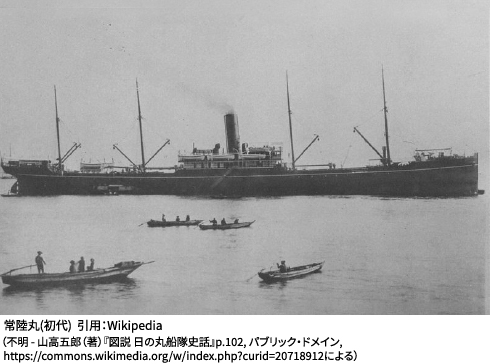
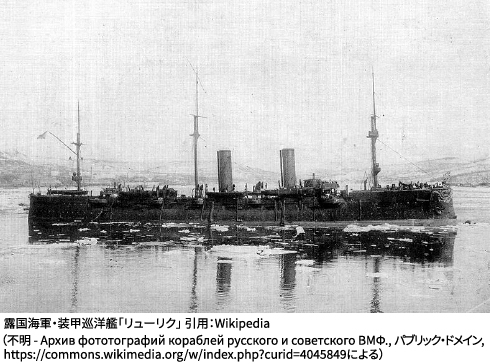
On June 15, 1904, Hitachi Maru, under the command of transport officer Lt. Col. Genjiro Suchi, was sailing in close proximity to the transport ship Sado Maru when they encountered the Vladivostok Cruiser Squadron in the Genkai Sea. Both ships came under fire. Hitachi Maru attempted to escape, but the engine room was hit, leaving her unable to maneuver. She was then subjected to intense close-range gunfire.
The death toll—including those who took their own lives—reached approximately 1,091, and only 147 survived. It is said that the victims included not only those killed by shelling, but also those who died by seppuku, suicide by pistol, or by throwing themselves into the sea.
Sado Maru also encountered the squadron the same day. After being advised to evacuate non-combatants, she was attacked, became disabled, drifted, and eventually ran aground on Okino-shima. Sado Maru suffered 236 deaths, with 694 survivors. The events surrounding these attacks are collectively remembered as the Hitachi Maru Incident, which caused a major shock to Japanese society at the time.
After the sinking, the precise location of Hitachi Maru remained unknown for many years, and no official investigation was conducted.
In 2023, as part of a BS-TBS project (television), an ROV (underwater drone) search was conducted using information such as local fishermen’s reports. The wreck was discovered on the offshore seabed of the Genkai Sea at around 80 meters, and was later identified as Hitachi Maru.
ROV footage suggested that the hull retained a recognizable shape, and that the interior might still contain personal effects, human remains, and cargo. However, due to the fast currents and depth, detailed diver-led investigation did not follow at that time, and the wreck’s condition remained largely undocumented.
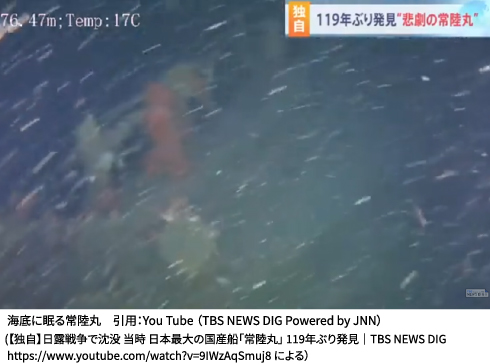
In 2025, Junji Terasawa (DivingBase JOINT, Fukuoka) shared information about the wreck with several individuals, including Yoshitaka Isaji (DIVE Explorers ( JKUEP founder). Based on this, a plan was launched for divers to directly reach the wreck.
In July 2025, the first dive was conducted by Boat Captain Junji Terasawa, divers Yuji Ohama, Daisuke Kato, and Jun Shimizu, with support from Kohei Honda and Naoki Kinoshita (Yoshitaka Isaji did not participate in this first dive). Despite the harsh conditions—open ocean and around 80 meters depth—the team successfully reached Hitachi Maru, established basic procedures, and achieved the first manned filming of the bow and stern sections.
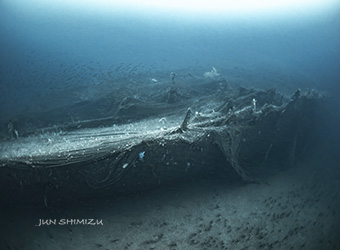
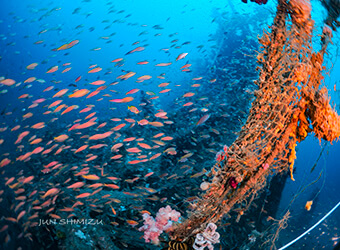
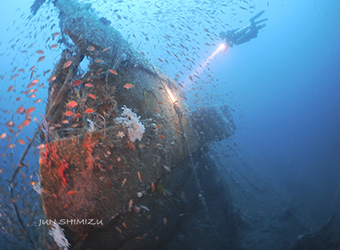
Yoshitaka Isaji regards Hitachi Maru as a “witness of history,” and believes that understanding the ship’s historical background is essential before undertaking an exploration dive. Diving a wreck is not only about observing an underwater landscape—it is also, in a sense, “diving into” the ship’s history.
Based on this approach, Isaji contacted the BS-TBS production company that first recorded the wreck, underwater cultural heritage researcher Randy Sasaki (Associate Professor, Teikyo University, as of August 2025), and representatives connected to the bereaved families (formally, the association was dissolved at the 100-year mark; volunteers continue related activities). Through these communications, multiple perspectives and requests were shared, including the site’s value as an underwater heritage resource, its meaning as a war-related structure, and the feelings of families and stakeholders.
For the August 2025 exploration, land and underwater support was also provided by Kohei Honda and Naoki Kinoshita, guests of “Marine Product,” operated by Jun Shimizu.
Preparation began two days before diving. Because the dive would reach approximately 82 meters, trimix and decompression gases were required, along with extensive preparation for support divers. Starting from zero required more than a full day of work.
Equipment configuration (as used in this exploration)
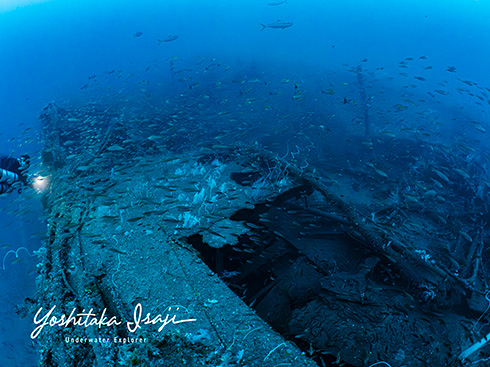
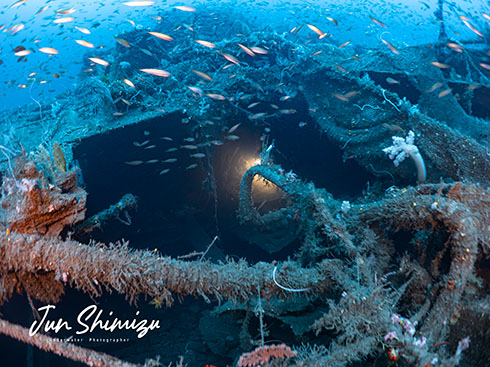
The first day aimed at penetration into the central cargo-hold area. Prior information suggested that bicycles might have been carried as cargo, so confirming artifacts and cargo was also considered. Based on ROV information indicating that the hold remained, the team targeted the midship area. To avoid damaging the wreck with the anchor, Captain Terasawa—an experienced guide familiar with the Genkai Sea—dropped anchor with great care.
After about 10 minutes of descent against the current, the team reached the deck, which was partially collapsed. Large amounts of fishing nets and lines were entangled around the hull, creating a high entanglement risk, but penetration into the wreck was successfully achieved. Cargo could not be confirmed, but internal structures such as the boiler and piping were observed, and the explored section was estimated to be a hold area from midship toward the stern.
On the second day, considering possible future investigations by other divers, the objective was to understand and record the overall wreck layout. After discussion, Isaji and Shimizu used a DPV to circle the wreck, filming and documenting as they went.
During the exploration, they recorded a room believed to be a command-related space with many windows, and they found and documented ceramic tableware believed to have been used in daily life. Seeing the tableware reinforced the sense that people once lived their lives there, and highlighted the significance of recording the wreck’s condition as ongoing deterioration continues over time.
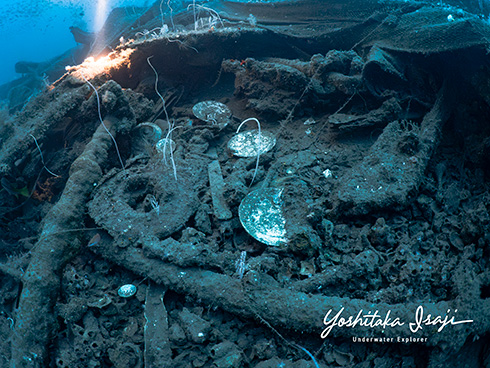
The team largely achieved the day-by-day objectives. This was made possible because each member was “strong” in their role—diver buddy, boat captain, and support team.
For Yoshitaka Isaji, diving is a means to achieve project goals, not an end in itself. The difficulty of “diving to 80 meters” and the difficulty of “carrying a camera and executing the filming task underwater” are fundamentally different. Increasing the number of divers in Japan who can reliably perform such tasks underwater will help expand exploration and survey work across many sites.
Related media coverage (August 2025 exploration)
On October 15, 2025, the exploration results and underwater photographs were presented to those connected to the bereaved families of the Hitachi Maru Incident. The venue was kindly provided by Yasukuni Shrine, where those lost in the incident are enshrined, and the report was held at the gathering hall of the Yushukan. Fourteen descendants of those who died attended, allowing the report to be shared in a quiet and respectful atmosphere.
Some attendees were fourth- and fifth-generation descendants, and for some it was their first direct connection to Hitachi Maru. Isaji has often said that “when you want to reflect on your roots and history, having records that remain is something truly valuable.” While fading memories are natural, having the ability to look back at the past at any time can be deeply meaningful. The team hopes the records and footage created through this work will contribute, even in a small way, to that purpose.
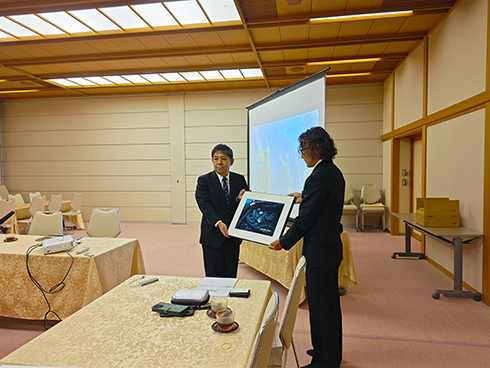
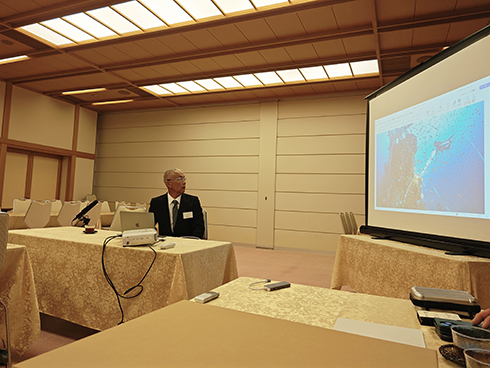
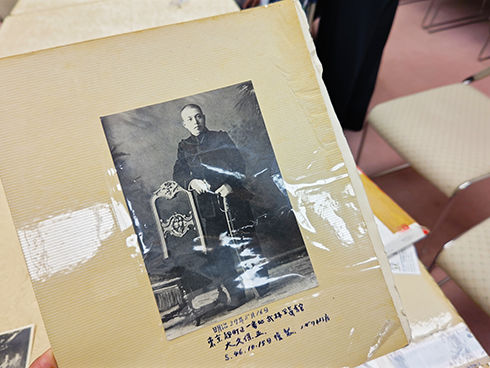
Through this opportunity, the team heard many valuable stories from bereaved families, Yasukuni Shrine staff who conduct memorial services each year, and representatives of Nippon Yusen Kaisha (NYK Line), the ship’s owner. The representative connected to the bereaved families is a descendant of Lt. Col. Genjiro Suchi, and descendants of Second Lieutenant Masa Okubo (a regimental standard-bearer) also attended. Viewing preserved historical photographs left a strong impression—records from the Russo-Japanese War era have been carried forward for more than 100 years through the efforts of families who have protected and inherited that history.
NYK Line also chatted that Hitachi Maru’s plans/drawings may exist in the NYK Maritime Museum, which could be highly useful for future exploration.
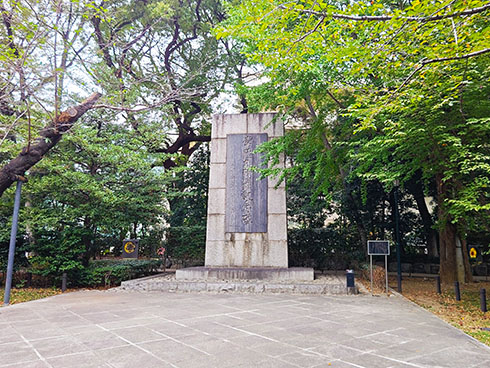
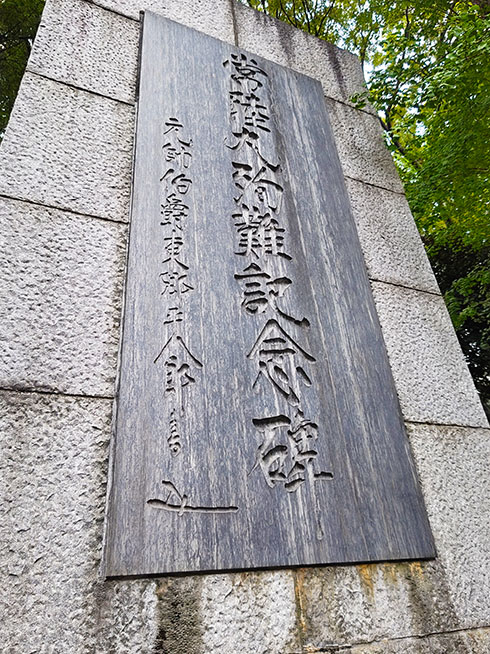
Yasukuni Shrine staff also explained the history of the Hitachi Maru Memorial Monument. After the incident, the monument was erected in Chidorigafuchi Park (Chiyoda, Tokyo), but it was removed and disposed of after World War II and its whereabouts became unknown. Later, it was unexpectedly found buried in the ground during construction work for Kudanshita Station, and it was reconstructed. The monument was discovered in a damaged condition and was repaired and reassembled; it now stands again within Yasukuni Shrine grounds. (The repaired central portion is the original part that was found; the surrounding sections were newly made during reconstruction.)
The Hitachi Maru incident has various circumstances and backgrounds, and there are many different perspectives on how it can be evaluated, but when I saw how history was being woven and passed down, it made me think deeply about what I myself can leave behind for future generations.
The major goal is to record and recover the remains of the many victims.



Copyright © 2024 Japan Karst & Underwater Exploration Project