
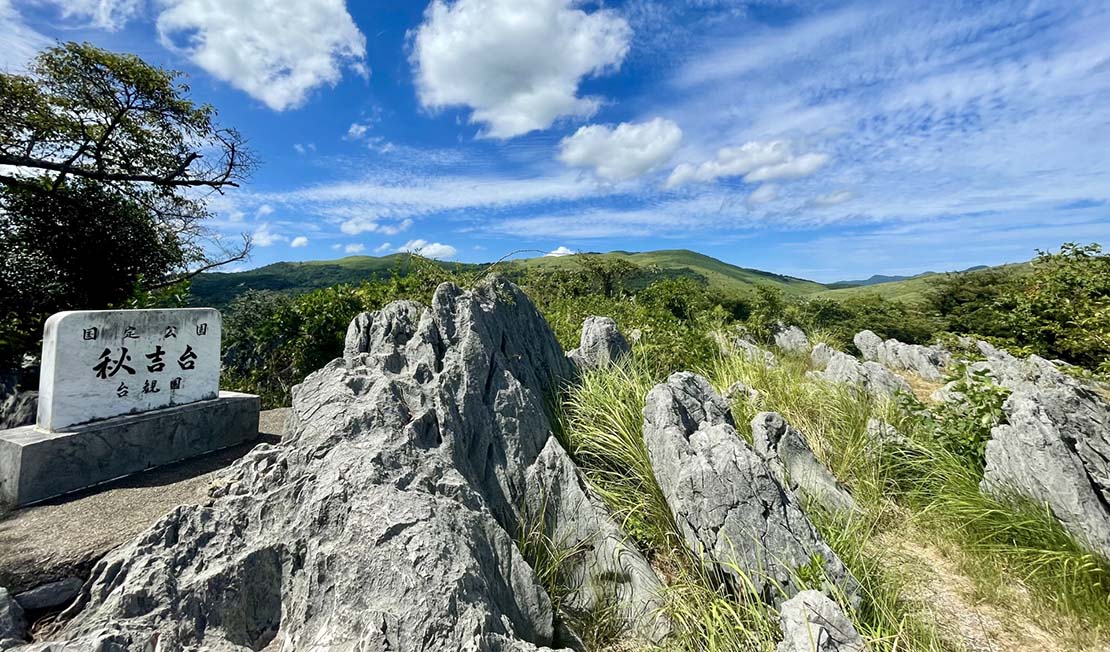
Akiyoshidai is Japan's largest karst plateau, spreading across the central and eastern parts of Mine City, Yamaguchi Prefecture. The limestone distribution covers approximately 93 km2, making it unparalleled in scale within Japan.
More than 400 limestone caves have been confirmed in Akiyoshidai. It is also home to Akiyoshido (Akiyoshi Cave), one of Japan's three major limestone caves and a Special Natural Monument.
Akiyoshidai is divided by the Higashikawa River into two plateaus: the East Plateau (Higashidai) and the West Plateau (Nishidai). The East Plateau (Akiyoshidai in the narrower sense) was designated as a Quasi-National Park in 1955 (Akiyoshidai Quasi-National Park) and became a Special Natural Monument in 1964. Individual caves have also been designated as Natural Monuments, and their conservation and management are handled with great care.
The limestone that forms Akiyoshidai is believed to have begun forming around 340 million years ago, later uplifting to the surface several million years ago. Over long periods, dissolution by water formed underground water systems, creating complex subterranean waterways that are thought to spread like a network beneath the plateau.
Research on Akiyoshidai's underground water system dates back to the 1950s, with extensive investigations particularly in the 1980s. Some of these studies involved actual diving; however, due to the limitations of cave diving techniques and survey methods at the time, it cannot be said that detailed underwater mapping, systematic investigation, or research on the underwater environment was fully achieved.
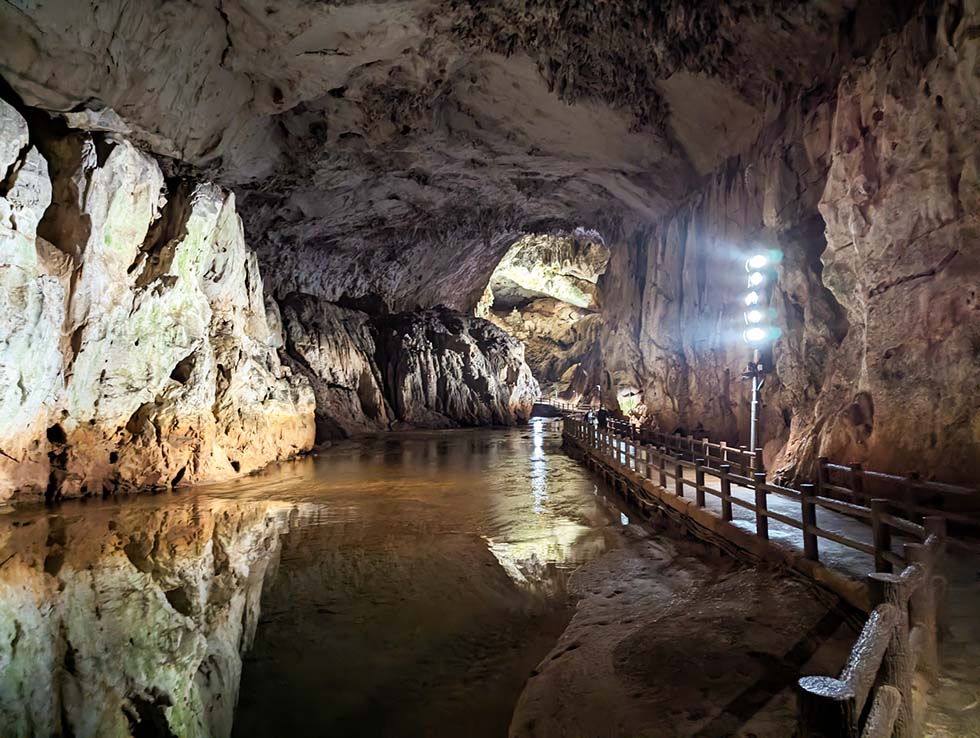
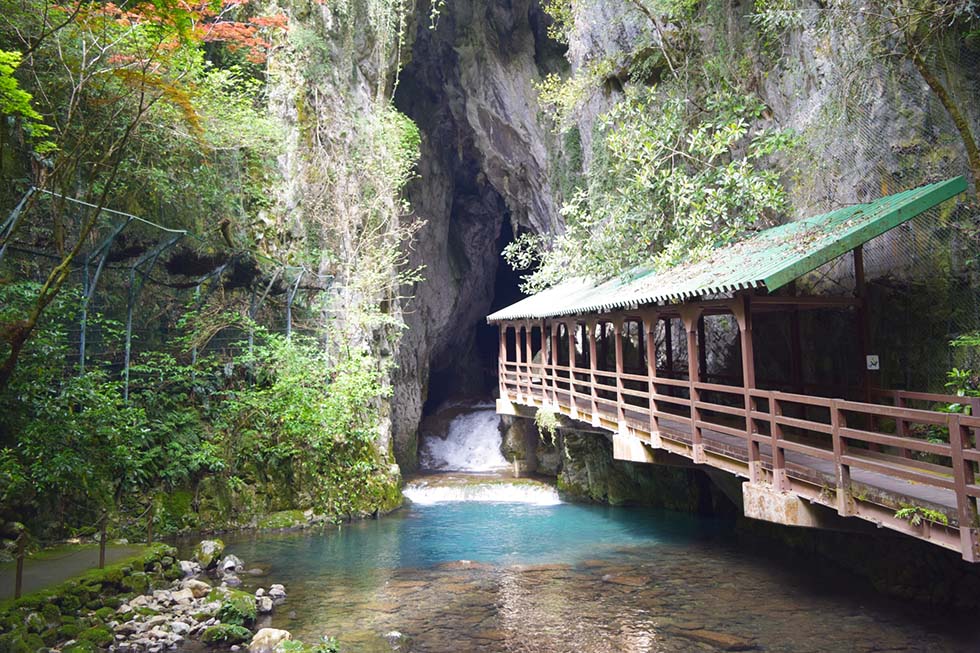
※ The entrance of akiyoshido
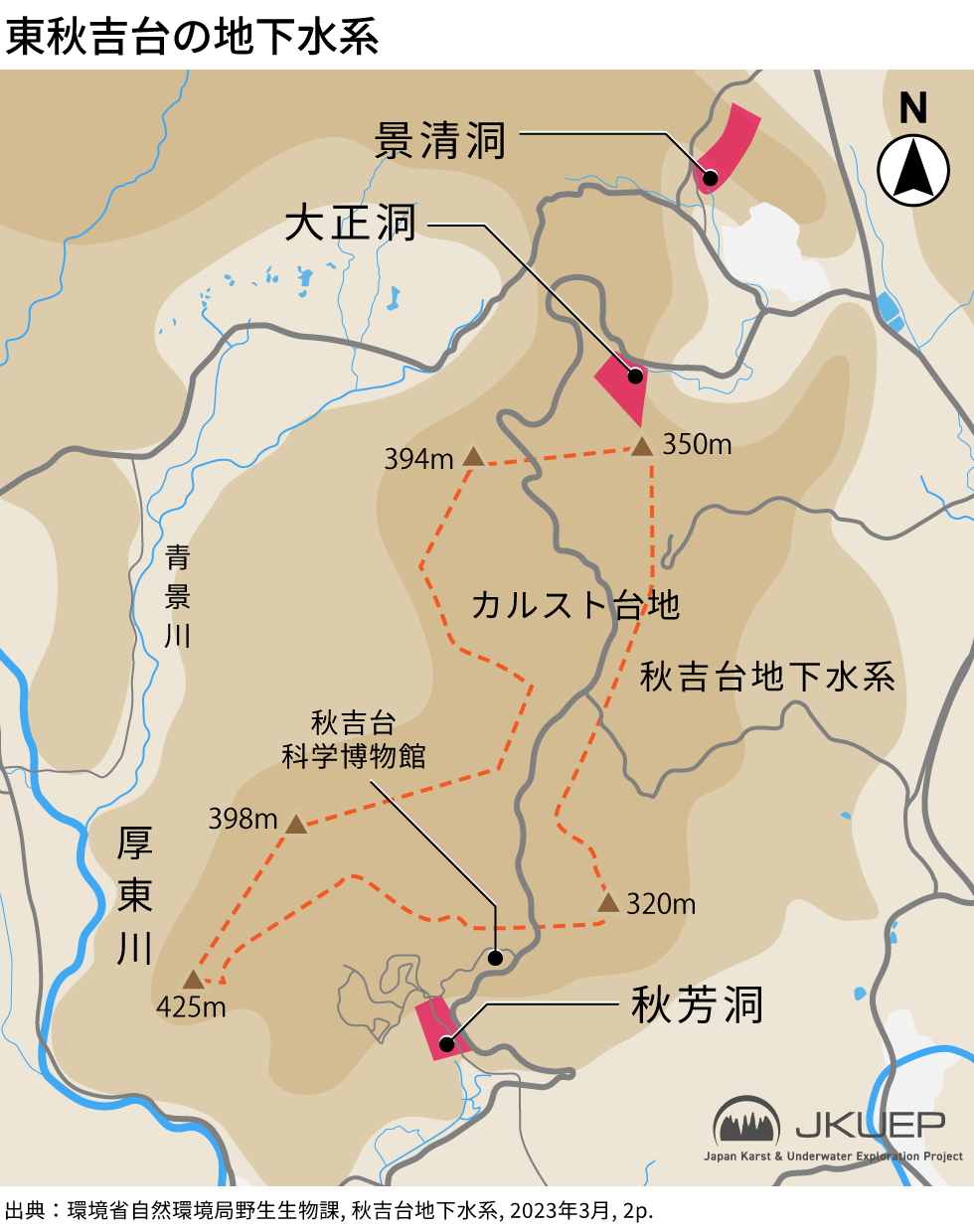
Underwater investigations in the East Plateau—especially around Akiyoshido—have progressed relatively well. The East Plateau’s underground water system is broadly classified into two systems: the northern Kanoide System and the southern Akiyoshido System, with estimated catchment areas of 1,200 hectares and 1,400 hectares, respectively.
In Akiyoshido, both dry and underwater investigations have been conducted intermittently, and as of December 2017 the total surveyed length (including dry and submerged sections) reached 10,700 meters. Around 30% of this is submerged, leaving room for the exploration of new main passages through diving.
However, considering that (1) investigations were already carried out to a certain extent in the 1970s–1990s, and (2) Akiyoshido is the only cave designated as a Special Natural Monument—requiring especially sensitive experience and environmental understanding—this project has decided to begin with the West Plateau, where fewer investigation examples exist.
Compared with the East Plateau, the West Plateau has fewer subterranean lakes, and past research on its underground water systems has been limited. While there are records indicating that some underwater sections were dived in the past, as far as we have investigated, we have not found examples of detailed underwater surveys or on-site underwater research.
The West Plateau’s underground water system can be broadly divided into three hydrological districts:
Within the Ofuku–Beppudai District lies Terayama-no-Ana (Terayama Cave), which has the largest subterranean lake in the West Plateau. This project first examined the possibility of initiating diving investigations with Terayama-no-Ana as the starting point.
Groundwater around Terayama-no-Ana (Terayama Cave) is said to drain from west to east. If this hypothesis is correct, Terayama-no-Ana may be connected underwater to the downstream Shiramizu-no-Ike (Shiramizu Pond). In particular, the groundwater levels at both locations are reported to be approximately 90 meters, and measurements indicate that groundwater level fluctuation due to rainfall is small throughout the year. Under these conditions, it is possible that they are connected by a relatively large underground waterway—and that a passable space for humans may exist.
Previous studies have suggested that downstream erosional processes once acted strongly in this zone, leading to considerable downward development of caves; however, the lower layers are now submerged due to groundwater-level rise associated with alluvial deposition, making direct observation impossible. By conducting diving investigations, it may become possible to directly observe subterranean structures that have only been inferred indirectly until now.
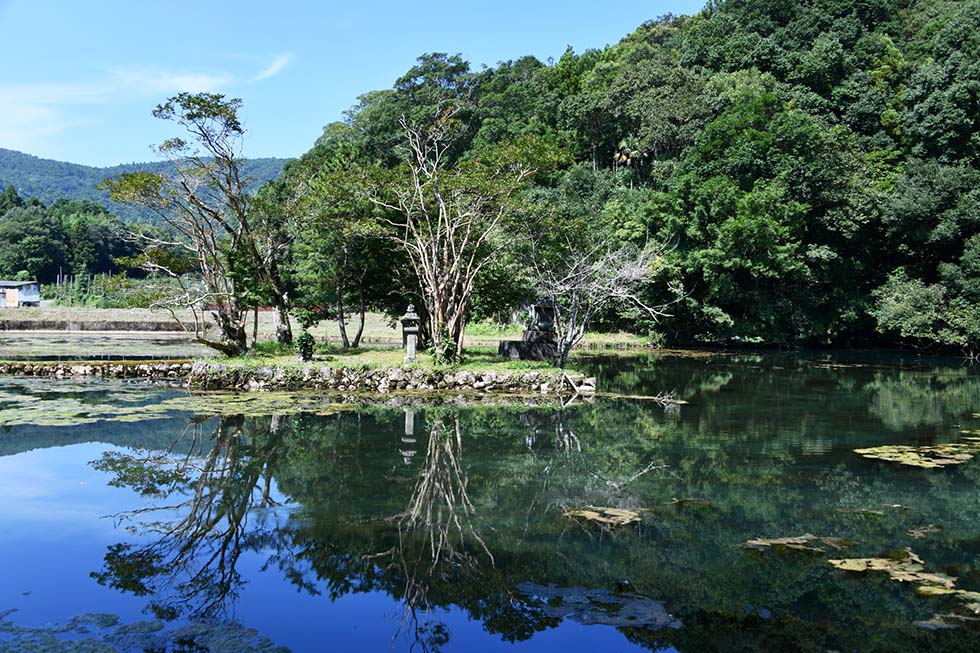
※ Shiramizu Pond (White Water Pond)
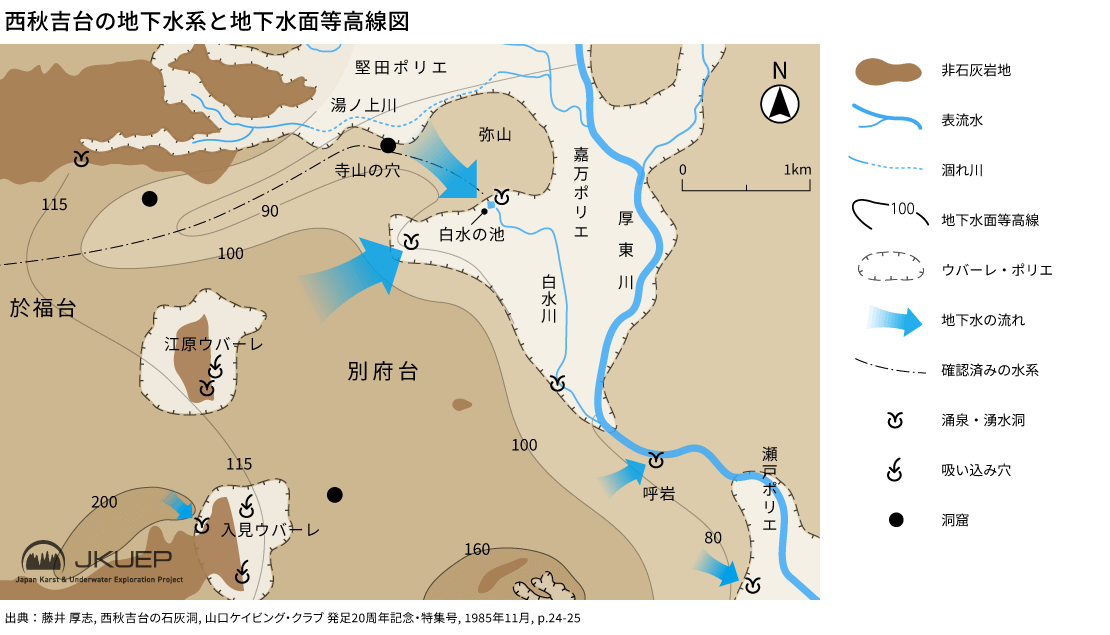
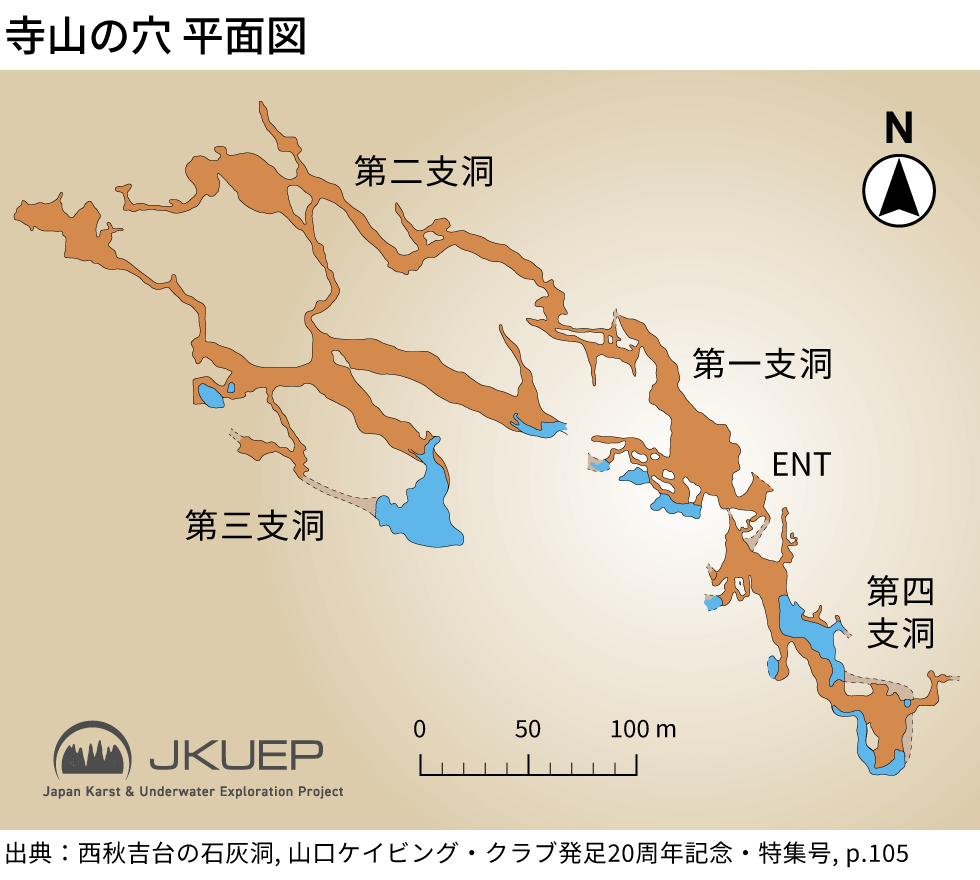
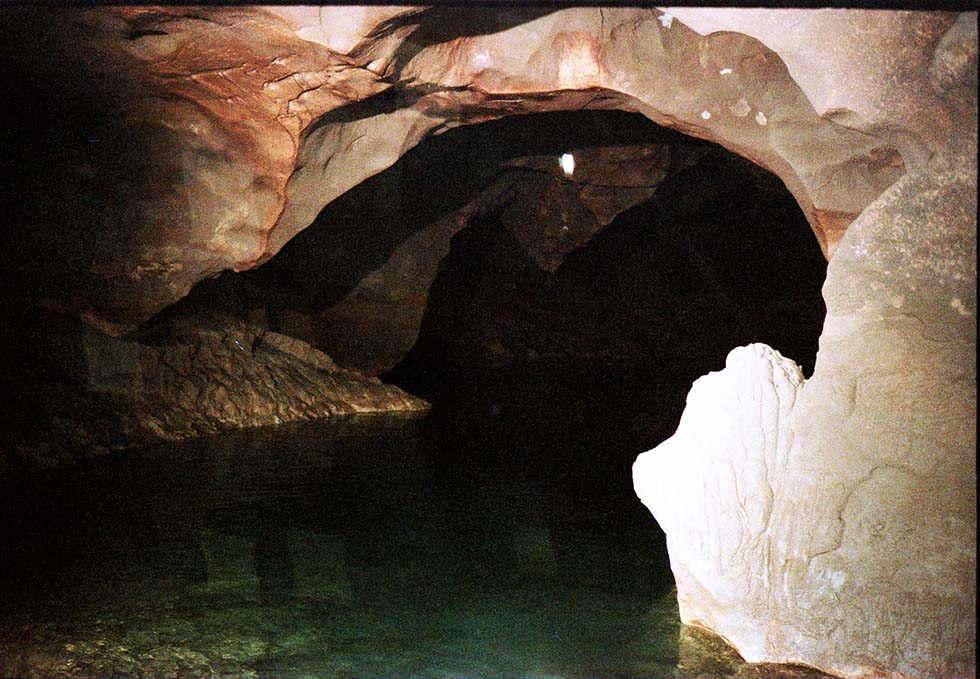
※ Underwater lake of Terayama-no-Ana
Prior to full-scale exploration, we planned a preliminary exploration at Terayama-no-Ana for mid-to-late February 2026. This plan is being led by Isaji, who heads both DIVE Explorers and JKUEP (Japan Karst & Underwater Exploration Project), and will be carried out in collaboration with Jun Shimizu, who regularly joins us as a team member, and with others, and in coordination with the Mine City Akiyoshidai Science Museum, the landowners, and the Mine City Cultural Property Protection Division.
Because Terayama-no-Ana is a cultural property and the plan involves diving, it required internal review within Mine City, and we were able to secure a realistic prospect of carrying it out.
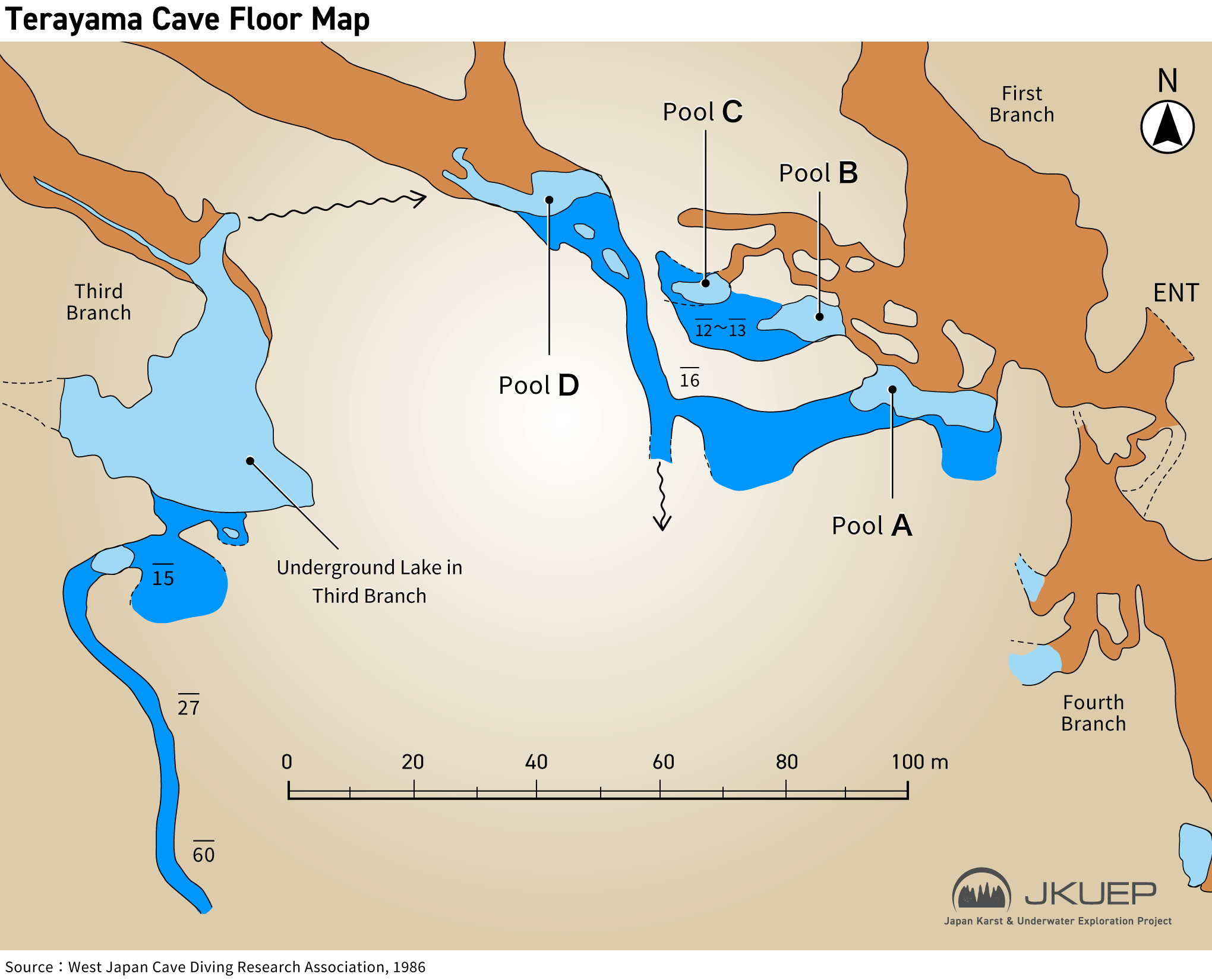
To reach the subterranean lake of Terayama-no-Ana, it is necessary to proceed from the First Branch through the Second Branch and onward to the back of the Third Branch. However, the Second Branch includes elevation differences and narrow passages; past records also report sections requiring crawling. Therefore, for the full-scale phase of this project, we would prefer—if possible—to reach the lake without passing through the Second Branch.
The existing maps suggest that the First Branch may connect to the Third Branch via a submerged section, and that it may also be possible to pass from underwater directly toward the subterranean lake.
Because the outcome of this confirmation could significantly affect the entire future plan, the objective of this preliminary exploration is to verify this point.
It has also been confirmed that a water surface exists in the Fourth Branch. While access requires SRT (Single Rope Technique), depending on project progress, members with SRT skills may also confirm the water surface in the Fourth Branch.
This preliminary exploration is planned with land support from university exploration clubs and dry cavers who have prior experience entering Terayama-no-Ana.
As noted above, the caves of Akiyoshidai, including Terayama-no-Ana, have already been explored and investigated to a certain extent.
When launching this project, we considered it essential to understand how far previous explorations had reached and by what methods they had been conducted. This was indispensable not only for planning future explorations and reporting their results, but also from the standpoint of safety management.
For that reason, I was introduced to Mr. Atsushi Fujii, who had previously carried out exploration and surveys involving diving in caves of Akiyoshidai, including Terayama-no-Ana, and I was given an opportunity to speak with him directly. Mr. Fujii also kindly provided valuable map materials. These are based on drawings produced by the West Japan Cave Diving Research Group, to which Mr. Fujii added the extent he had reached farther inside.
While examining these valuable materials, I felt the joy of carrying forward the exploration and research of those who came before us, and at the same time a renewed sense that we, too, must produce concrete and valuable records that can be passed on to future generations.
The maps he provided indicated, as we had originally assumed, that the First Branch of Terayama-no-Ana is connected to the Third Branch through a submerged section. They also suggested, again in line with our prior hypothesis, that there may be a route leading from the First Branch side directly to the subterranean lake at the rear of the Third Branch.
Based on this information, we made a slight revision to the purpose of the preliminary exploration conducted in February 2026. In addition to confirming and securing the route we had anticipated, we set out to verify whether it would be possible to reach the subterranean lake in the Third Branch from the First Branch side in preparation for a future full-scale exploration.
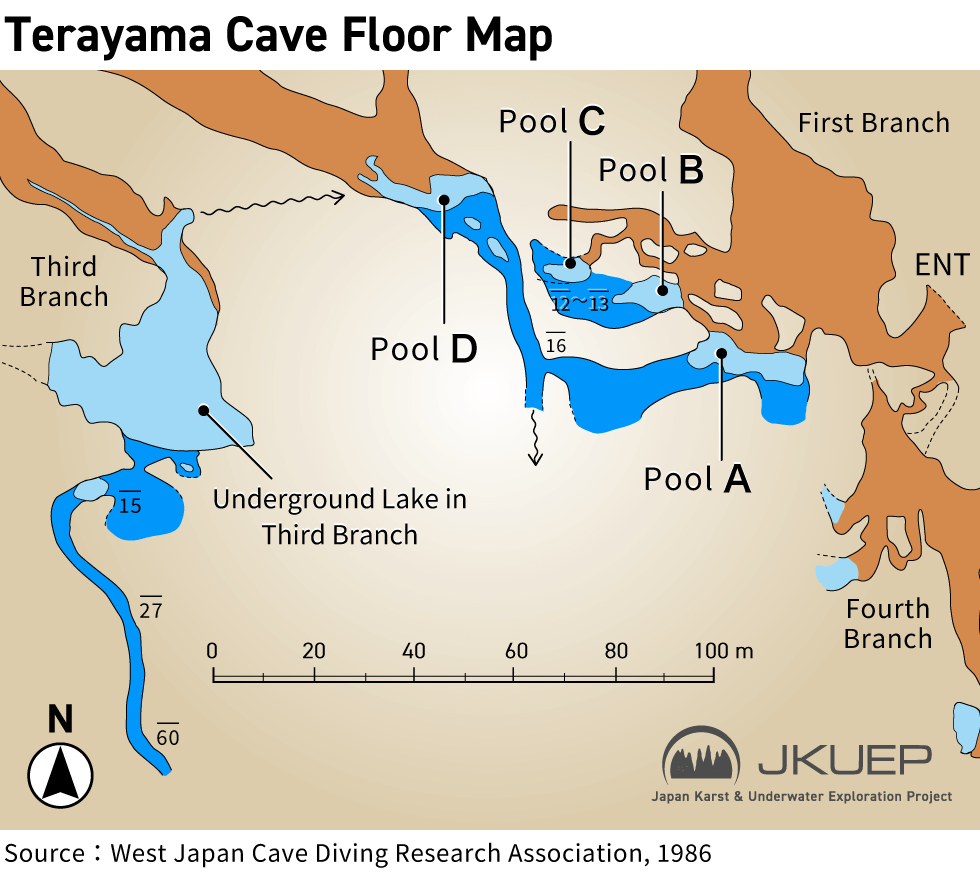
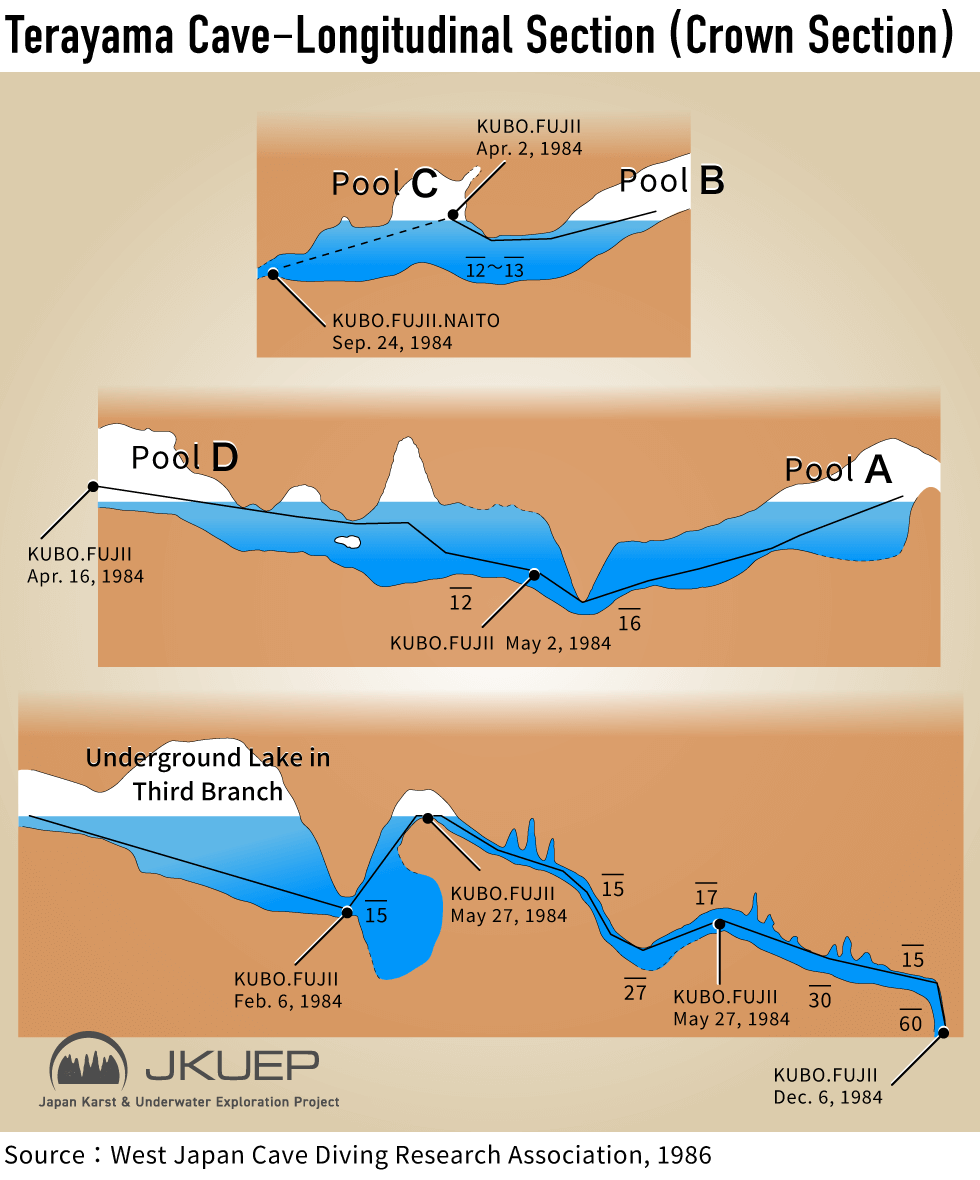
Through my exchanges with Mr. Fujii and my review of the materials he provided, one thing I found especially interesting was the difference in how cavers and cave divers perceive the underwater parts of caves.
Mr. Fujii comes from a dry-caving background and conducted cave diving as an extension of that work. By contrast, I, Yoshitaka Isaji, work primarily as a cave diver and have also taken up dry caving as necessary in support of that activity.
My understanding is that the submerged parts of Akiyoshidai have so far been opened up mainly by explorers, including Mr. Fujii, with a strong caving background. As a result, existing materials strongly reflect the intention of crossing submerged sections in order to reach dry passages and clarify continuity on land. This has left us with many sections where the shallower parts and connections to dry passages are already well understood.
From the perspective of a cave diver, however, the emphasis tends to be on searching widely underwater and clarifying continuity between underwater sections themselves. Because of this difference in viewpoint, it appeared to us that deeper underwater areas, and passages leading farther away from the dry parts, may have remained largely unexplored until now.
That said, considering when the earlier exploration was carried out, this difference was also likely influenced in large part by the fact that available dive time was far more limited than it is today.
In any case, this project aims to respect the achievements of the past while also making use of these differing perspectives to reveal new aspects of the Akiyoshidai underground water system.
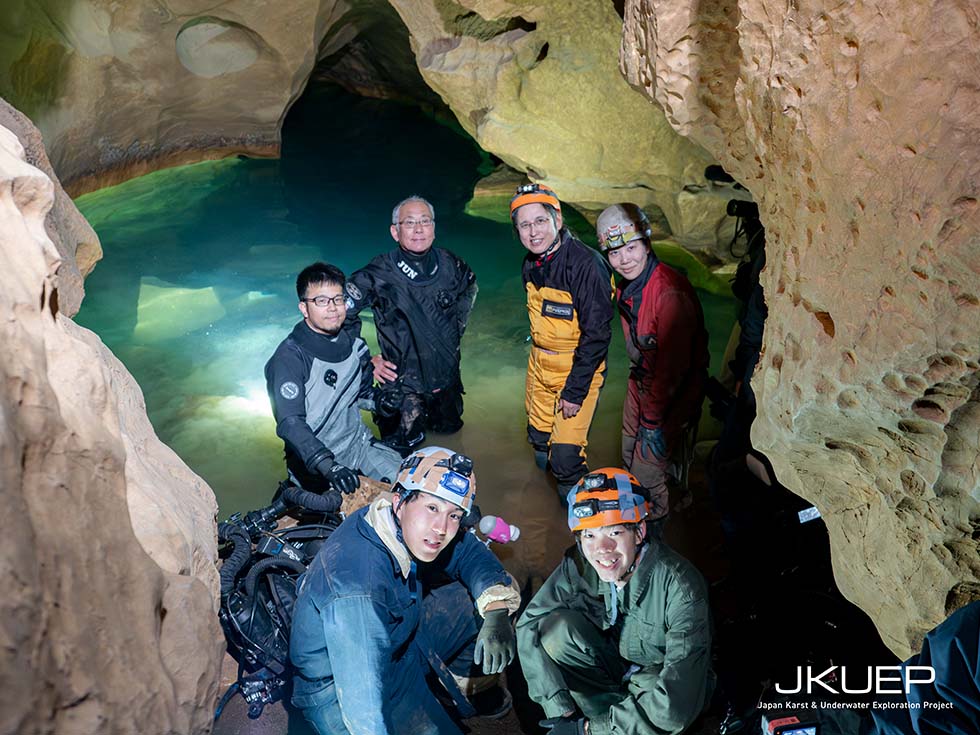
As planned, we began the first day of the exploration by entering the site together with myself (Yoshitaka Isaji), underwater cameraman Jun Shimizu, cavers Satoshi Goto, Kanon Murata, Shohei Kikuyama, and Masamune Kitagawa, who handled land support, as well as members of the press.
Several of the accompanying cavers had entered Terayama-no-Ana before, but this was my first time in the cave. I therefore began by confirming the internal structure and environment on site, as well as the positional relationship of the subterranean lakes shown on the existing maps.
After walking approximately 100 to 150 meters up a mountain path from the parking area, a large cave entrance appeared. Descending the slope near the entrance led us into an enormous chamber.
This chamber was extremely large and gave a strong sense of the thickness of the Akiyoshi Limestone formation, the mother rock of Akiyoshidai. In the Ryukyu Group of the southwestern islands, including Okinawa Main Island, where I have conducted many dives, the limestone thickness is generally said to be around 40 to 100 meters. In Akiyoshidai, however, the limestone formation is said to be on the order of 1,000 meters, and I felt that this difference was clearly expressed in the scale of the underground space itself.
When we passed through the chamber and checked the subterranean lake (Pool A) where we had planned to dive, we found that the water level had dropped significantly, apparently due to seasonal factors, leaving a height difference of about five meters down to the water surface. It became clear that reaching the water without rope access would be difficult.
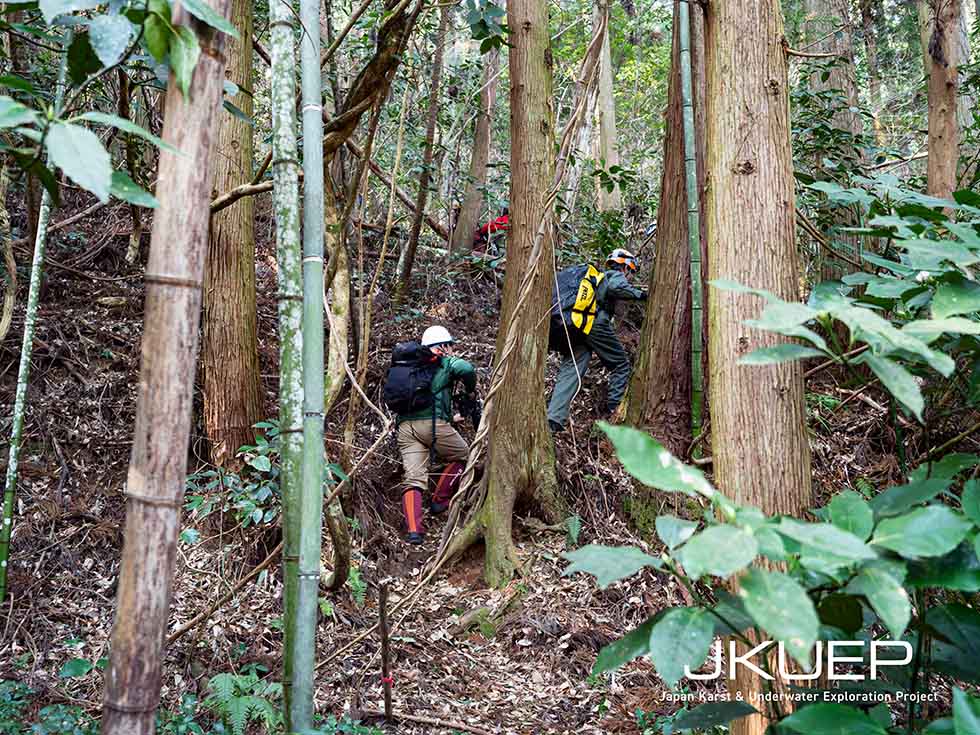
※ The slope leading to Terayama Cave
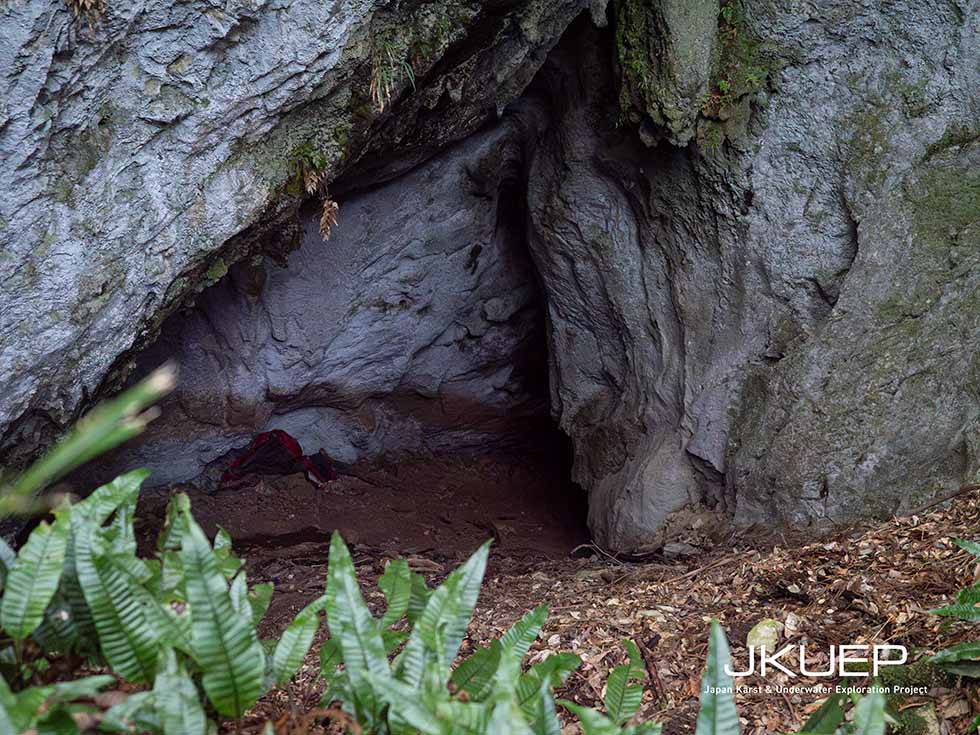
※ The entrance to Terayama Cave
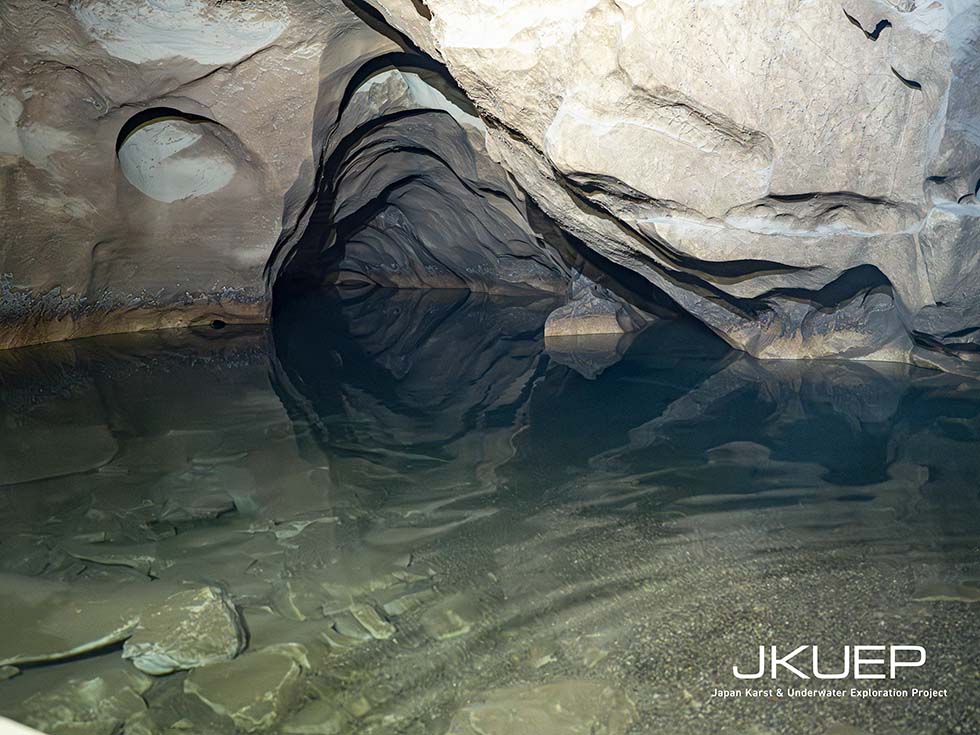
※ The surface of the underground lake (Pool B) at Terayama Cave
In light of this situation, we changed the plan for the first day and decided to dive from Pool B, which was relatively easy to access, in order to determine whether it might be possible to reach the Pool A–Pool D system from the Pool B side.
According to a map made about forty years ago, Pool B was not connected to the Pool A–Pool D section. Even so, if entry from Pool B proved possible, the efficiency of future exploration could improve significantly, and we judged it worth confirming. Although no clear current was felt in Pool B, gravel had accumulated on the bottom, and geomorphological features suggesting a past flowing-water environment were observed. The bottom material was also relatively coarse, and turbidity caused by sediment stirred up during preparation settled in a short time.
The water temperature measured during dive preparation was 12°C, far below the approximately 17°C we had expected in advance. Because this was our first exploration and we had chosen equipment that prioritized mobility during the land approach, Mr. Shimizu and I agreed to begin the dive with a limited bottom time.
Immediately after entering the water, visibility near the surface was about 4 to 5 meters, but as we descended, the bottom changed to silty material and visibility dropped to around 30 to 50 centimeters. We advanced to a depth of approximately 13 meters, but the passage gradually narrowed and ended. This matched the maximum depth recorded during a dive investigation in 1986. While a passage may once have existed farther on, we judged that it is now blocked by sediment and returned without forcing further progress.
Based on the results of the previous day, we brought in caving ropes and heated vests and carried out the second day of the exploration. Mr. Goto and the other cavers established a rope route from the flat area down to the surface of the subterranean lake and provided full support for ascent and descent.
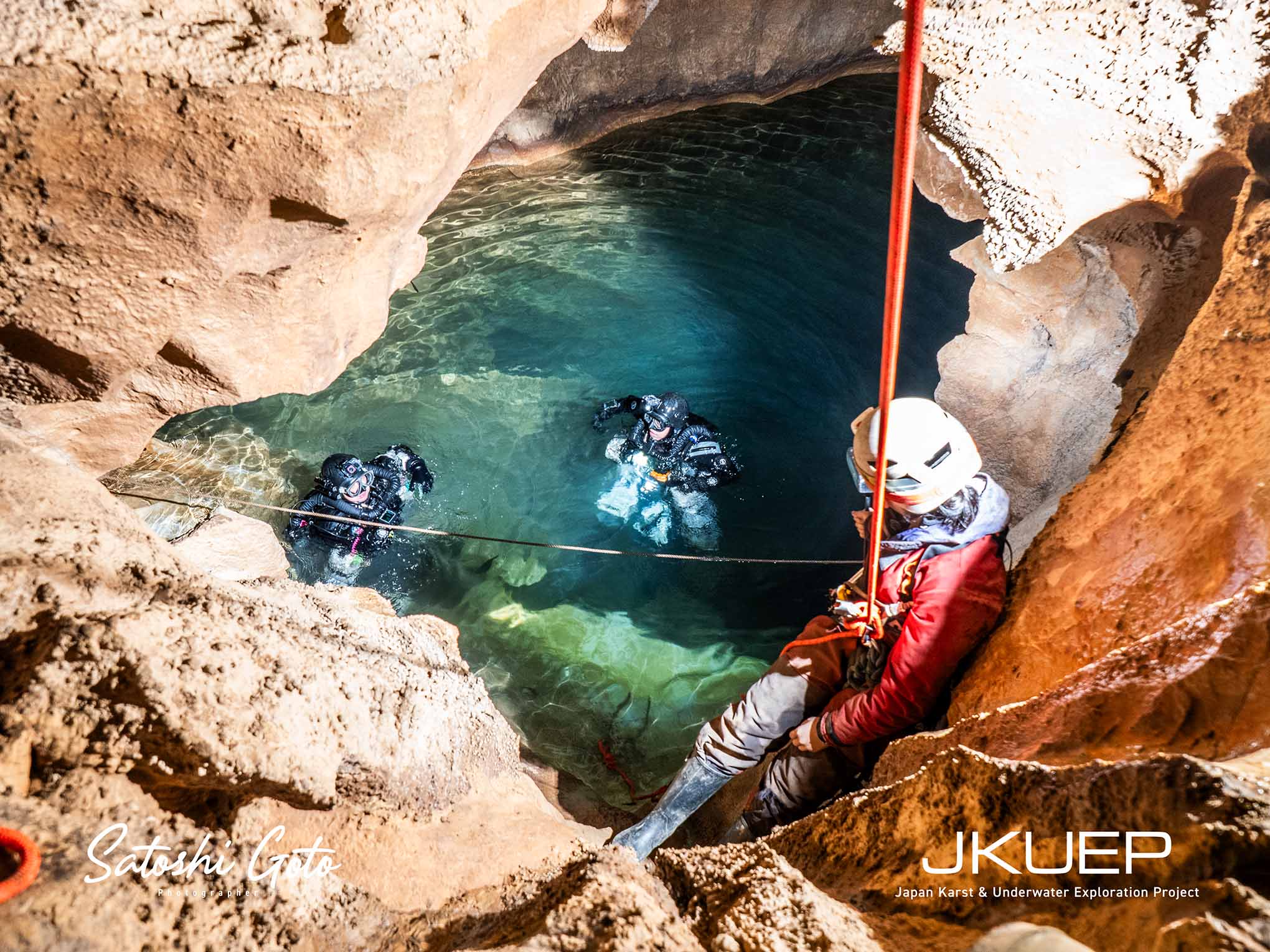
※ The surface of the underground lake (Pool A) (Photo by Satoshi Goto)
Before the dive, a reporter who had come to the site that day told us that, in the Nara period (about 1300 years ago), copper for the Great Buddha of Nara had been mined from caves in Akiyoshidai, specifically at the Naganobori Copper Mine, in a total amount of some 500 tons. We were told that the copper in the dry parts has now been exhausted, but conversely this raises the possibility that copper may still remain in underwater sections. It was another reminder that once investigation begins on site, new information starts to come in from all directions, and it left me looking forward to what further work might bring to light.
For the actual dive, tanks and diving equipment were lowered down from above to the water surface and donned there. After reaching the subterranean lake, it took about forty minutes before we could begin the dive, including lowering and arranging the equipment and completing pre-dive checks. Since taking the equipment off at the end would require a similar amount of time, we would be exposed to a low-temperature environment for a long period both before and after the dive. This made us keenly aware once again that, in exploration diving, comprehensive cold protection is essential not only during the dive itself but also throughout preparation and exit. I also felt that if we had not added the heated vest after the first day, we would not have been able to dive at all.
Once the dive began, we found a succession of passages with smooth inner walls characteristic of a flow cave, leaving almost no places where a guideline could be tied off from the open-water area. In addition, the passages changed vertically quite dramatically, and in some places the ceiling and floor narrowed into crack-like constrictions. If we had proceeded without tying off the line, it could easily have slipped into such places, potentially making it impossible for a diver to pass near the line. Route selection therefore required extremely careful judgment.
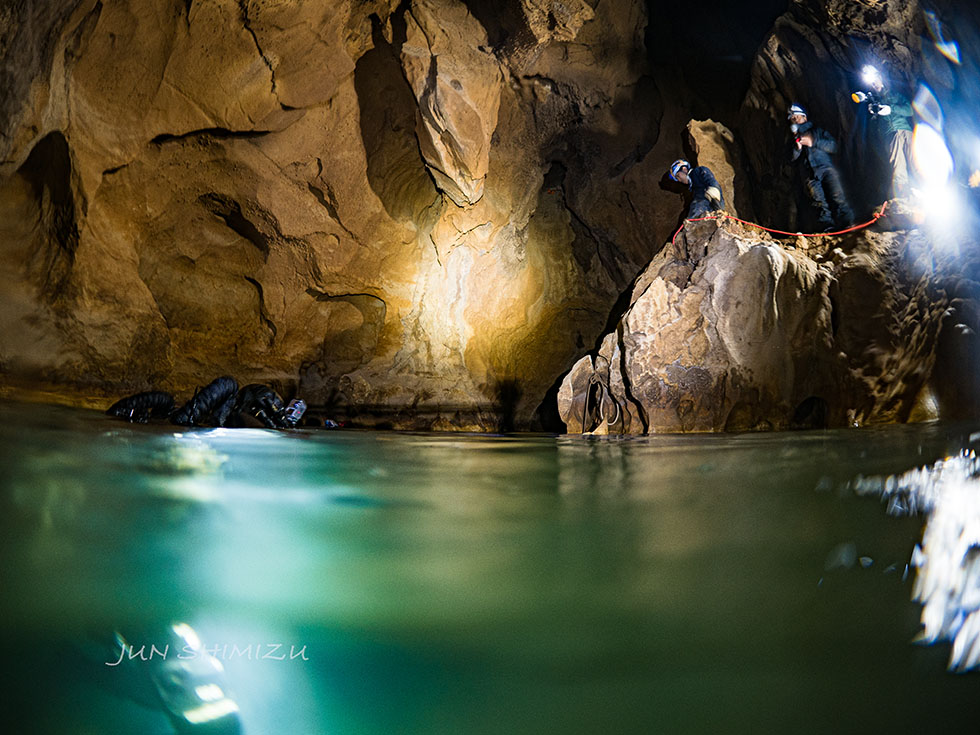
※ Near the surface of an underground lake (Photo by Jun Shimizu)
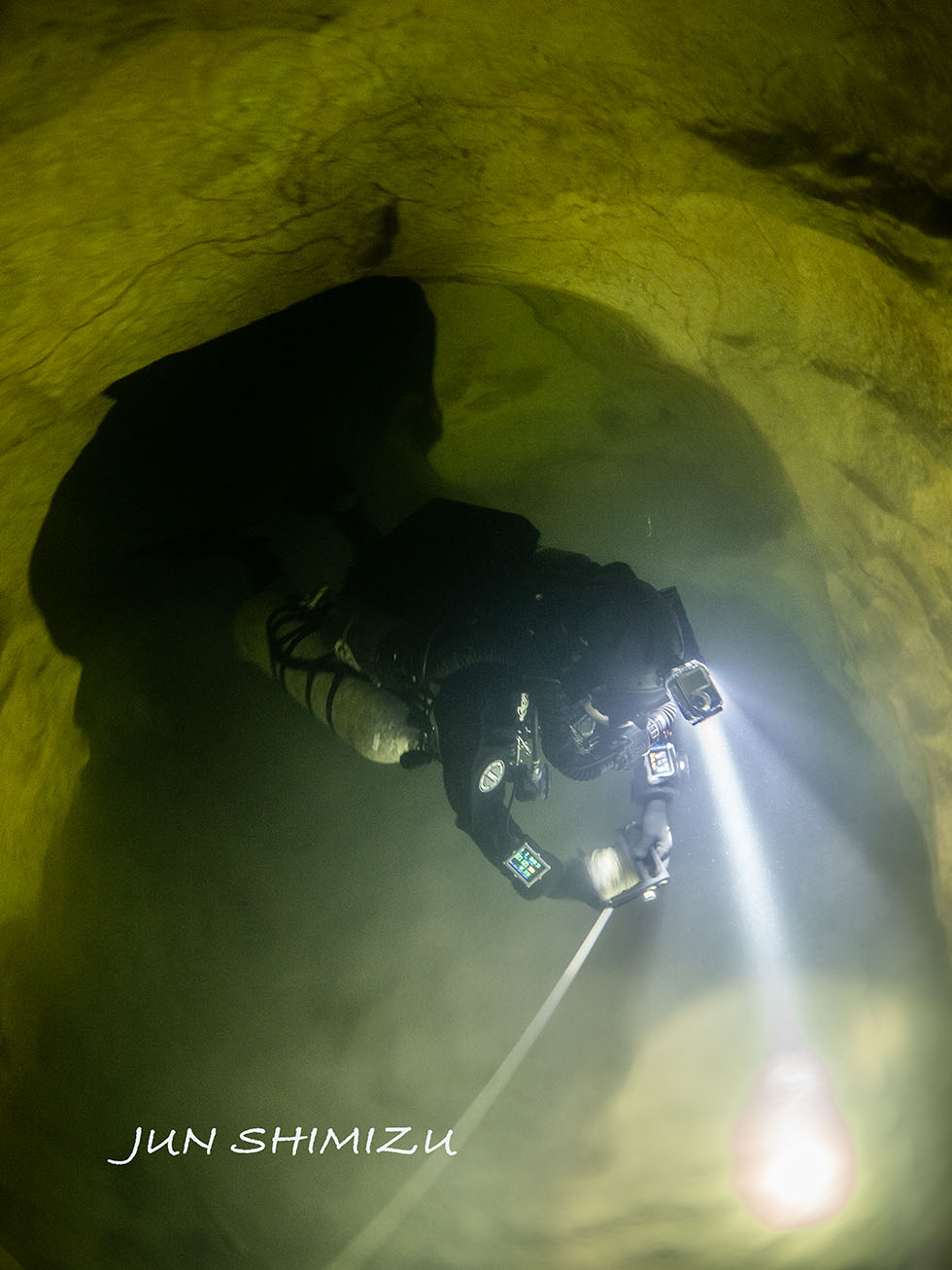
※ Underwater tube passageway (Photo by Jun Shimizu)
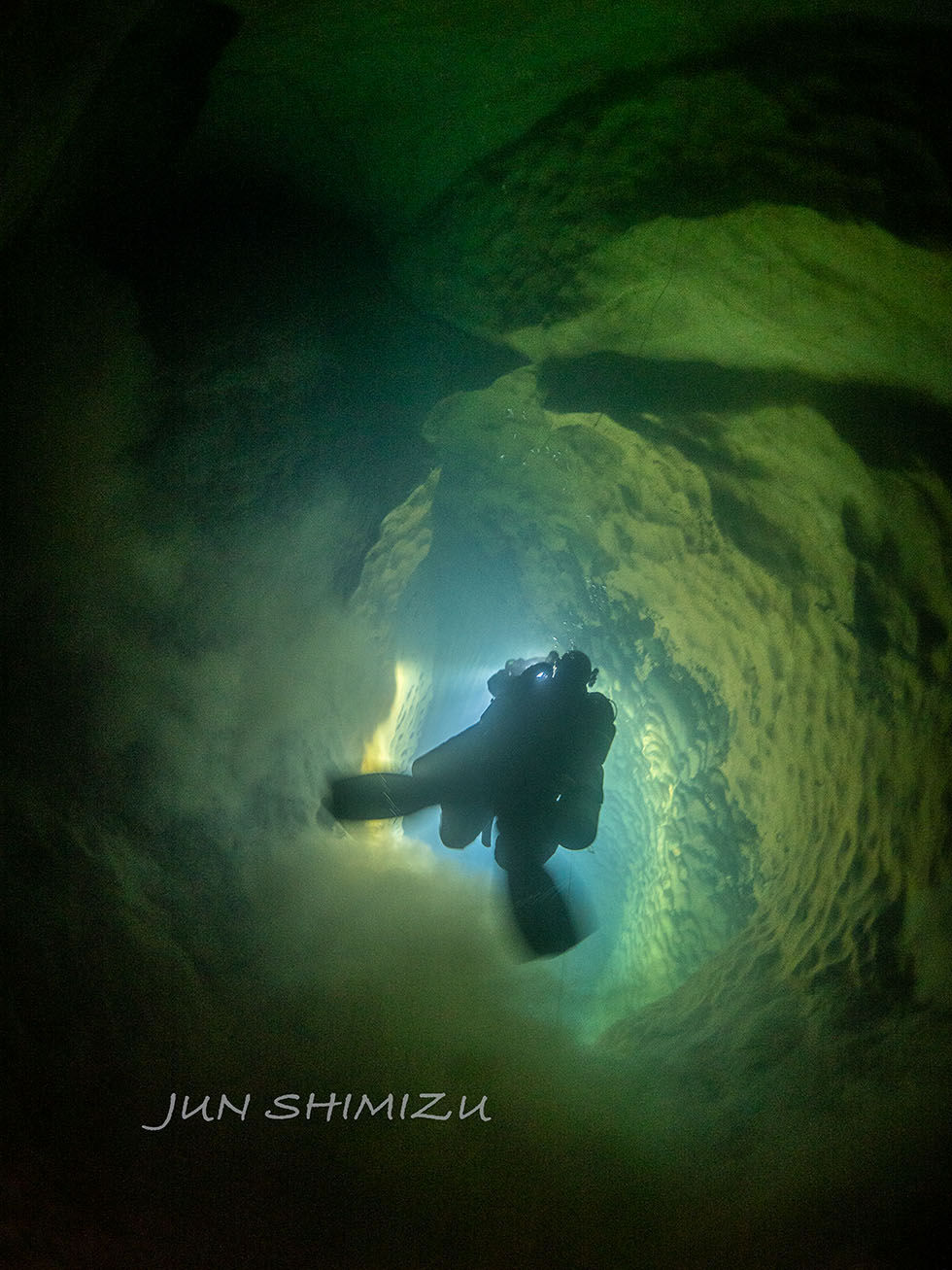
※ A vertically descending passage. Scalloped patterns can be seen on the sides. (Photo by Jun Shimizu)
Despite the difficulty of finding tie-off points, the following observations were made underwater:
Underwater, we reached the western end of the submerged area shown on a map drawn about forty years ago, but we could not confirm the northward passage indicated on that map. Keeping our original objective of reaching the subterranean lake in the Third Branch in mind, we therefore changed course and proceeded south from the western end. As we moved south, the passage dropped vertically from a depth of about 15 meters to more than 30 meters. There may have been a keyhole passage around 15 meters, but this was not entirely clear.
On the walls of this descending section we observed the banded stratigraphic structure mentioned above, and we also found amphipods. These may differ from known species inhabiting interstitial water, and we plan to consider collecting specimens in consultation with Mine City and others. From the bottom, we also confirmed a tubular passage extending laterally with a slight downward trend. However, by the time we confirmed that it was passable, our no-decompression limit had fallen to about two minutes, so we did not proceed farther and began our return.
This exploration made it clear that many environmental conditions differed from what we had assumed in advance. However, identifying such differences was precisely the main purpose of the preliminary exploration, and from that standpoint we regard it as an extremely meaningful initial investigation.
For the next exploration, in addition to thermal protection suitable for long-duration diving, we are considering the introduction of equipment that will allow lines to be secured to smooth wall surfaces, as well as surveying instruments that will make it possible to understand the maze-like structure objectively. We are also considering bringing in research equipment for biological and geological investigation as needed, and setting a concentrated investigation period of around ten days to two weeks.
Finally, this investigation was only possible because of the land support provided by the cavers. We extend our sincere gratitude to all the cavers who supported us, to Jun Shimizu who dived with me as my buddy, and to the landowners, the Mine City Akiyoshidai Science Museum, and the officials of Mine City who cooperated with the investigation.
Related media coverage (About the February 2026 preliminary exploration)
※ The sections that follow, through "Summary for the Next Exploration," describe the plan as it stood on completion of the preliminary exploration in February 2026.
Through this diving exploration, we were able to gain an overall impression of the underwater environment of Akiyoshidai, particularly of the submerged character of the West Plateau. Based on this, our next step will not be to rush toward a deep breakthrough at a single site, but rather to actually dive the major candidate sites across the area, compare them, and then determine priorities while viewing the Akiyoshidai underground water system as a whole.
Based on past dive records, maps prepared at the time, and information from people who have studied Akiyoshidai for many years, we selected the following as candidate sites for the next phase of exploration:
In these underwater caves, most sections located more than about 250 meters from the underwater entrances, as well as most of the deeper sections, remain unexplored. In the next exploration, except for Terayama-no-Ana, where we have already dived this time, we do not intend to immediately push for the deeper inner parts. Instead, we would first like to actually dive all of the candidate sites listed above. At each site, we plan to establish methods for entry and exit, formulate future exploration plans, and understand the underwater environment, thereby building the foundation necessary to conduct later explorations safely and smoothly.
At Terayama-no-Ana, as in the present exploration, we intend to begin diving from the subterranean lake (Pool A) and carry out the following:
Prior to the diving exploration planned for May, a rescue exercise at Terayama-no-Ana organized by the Rescue Section of the Speleological Society of Japan is scheduled, and I will participate as a member of the organizing committee. We hope to make full use of this training in preparation for any injury or accident that might occur at Terayama-no-Ana during future explorations. It should be noted, however, that the rescue exercise organized by the Rescue Section of the Speleological Society of Japan and our diving exploration are not being carried out as one directly integrated project.
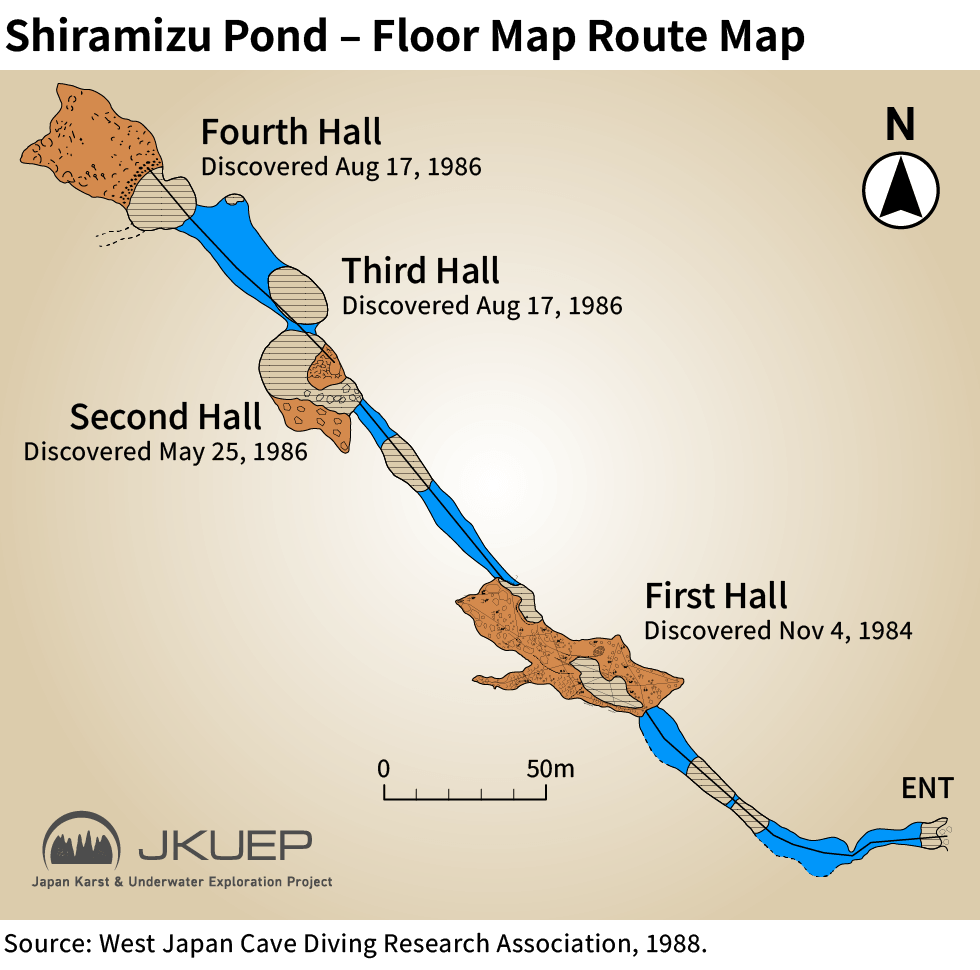
※ Underwater map of Shiramizu no Ike
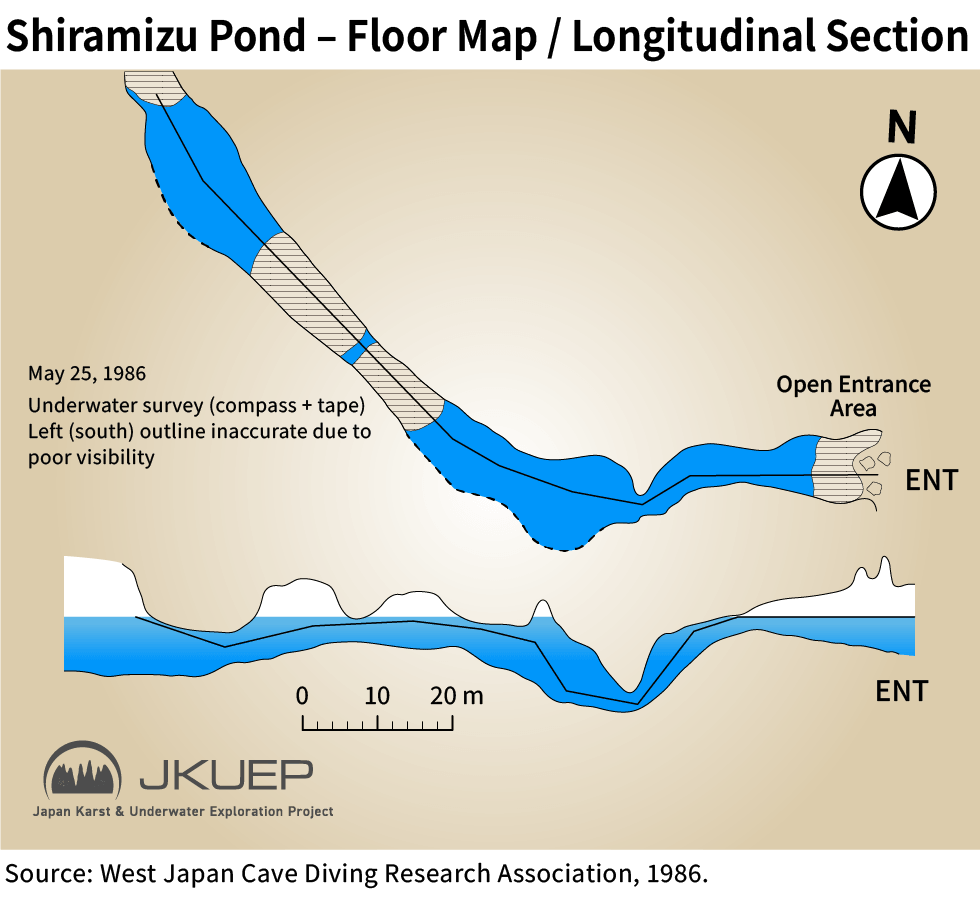
※ Cross-sectional map (Up to 1st hall)
Located downstream of Terayama-no-Ana, Shiramizu-no-Ike is, as noted above, highly likely to be connected to Terayama-no-Ana as part of the same water system, and it may even be continuous through spaces large enough for a human to pass through.
The water of Shiramizu-no-Ike is also used as agricultural water by the surrounding area. For that reason, clarifying the water system from this point down to the Koto River would have not only academic significance but also practical significance from the standpoint of local use.
In the past, dives were carried out there by Mr. Fujii, members of the West Japan Cave Diving Research Group, university exploration clubs, and also an NHK diving team, and the cave has been mapped to a distance of about 300 meters from the entrance. On the other hand, it has been suggested that unexplored passage continues beyond the mapped furthest point, known as the “Fourth Hall.” If we dive there, our first goal will be to re-establish a guideline along the route to the previous point of maximum penetration.
Because the dive begins from a wide pond, preparation and exit at Shiramizu-no-Ike are relatively easy. Therefore, once line installation and an overall understanding of the site have been achieved, it may also serve in the future as a place for members who are diving in Akiyoshidai for the first time, or for newly paired team members, to become accustomed to this environment.
Tsurube-otoshi-no-Ana (Ono no Yusui) is a spring in the Ono area of the West Plateau of Akiyoshidai, and an underwater vertical shaft descending straight downward to depths greater than 50 meters has been confirmed there.
It was explored and surveyed between 1980 and 1983 by the West Japan Cave Diving Research Group, and from the drawings alone its structure is reminiscent of the famous vertical cenote known as “Pit” in Mexico.
We would like to confirm not only unverified lateral areas, but also whether a route continues beyond the already surveyed depth of 51 meters. However, it is not yet clear how much preparation will be required, and deep diving carries greater risk. For that reason, our first exploration there is planned to remain limited to checking shallow lateral areas and re-establishing a line down to the 51-meter point already reached in earlier work.
At present, I do not yet have a clear understanding of which water system Ono no Yusen is connected to. We therefore want to clarify that in advance and increase the exploration value of this site so that it does not end as a one-off dive.
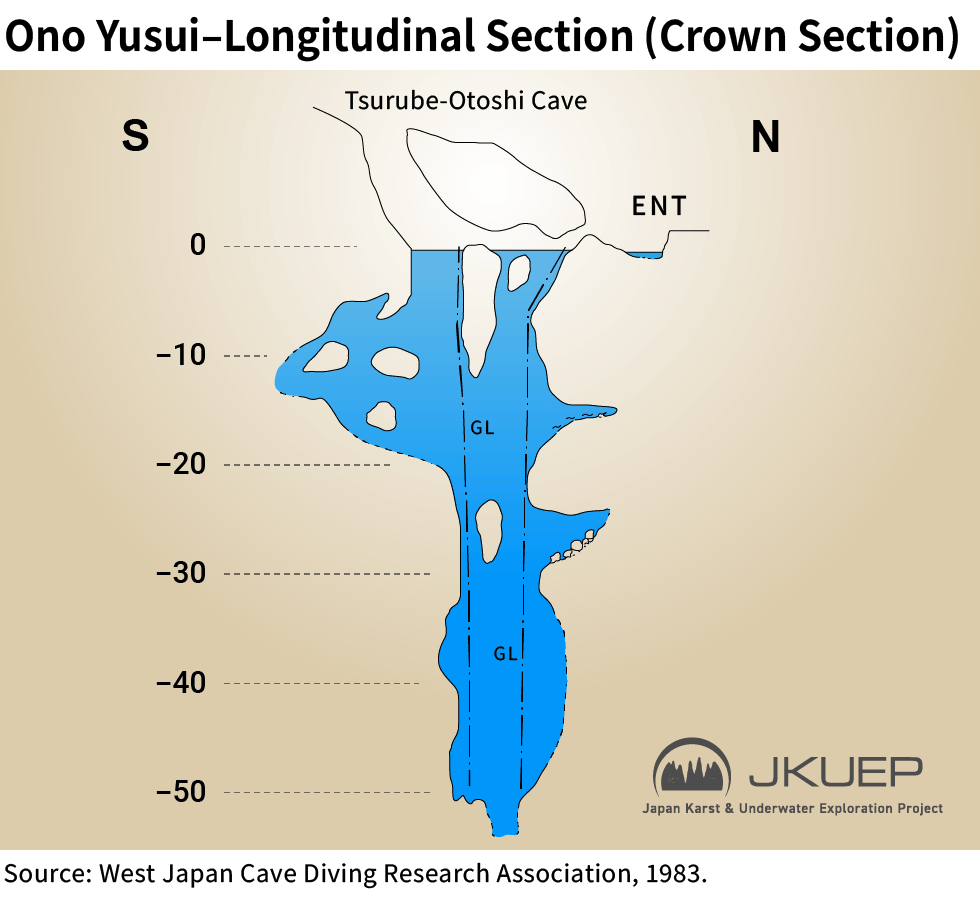
※ Underwater map of Ono-no-Yusui
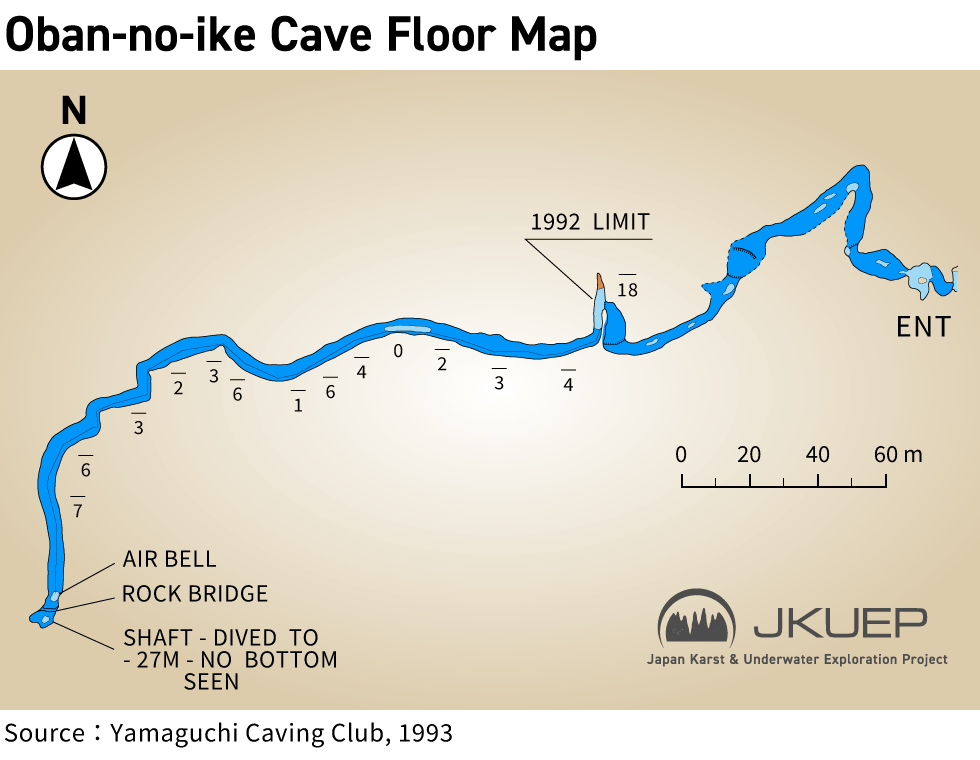
※ Underwater map of Oban-no-Ike
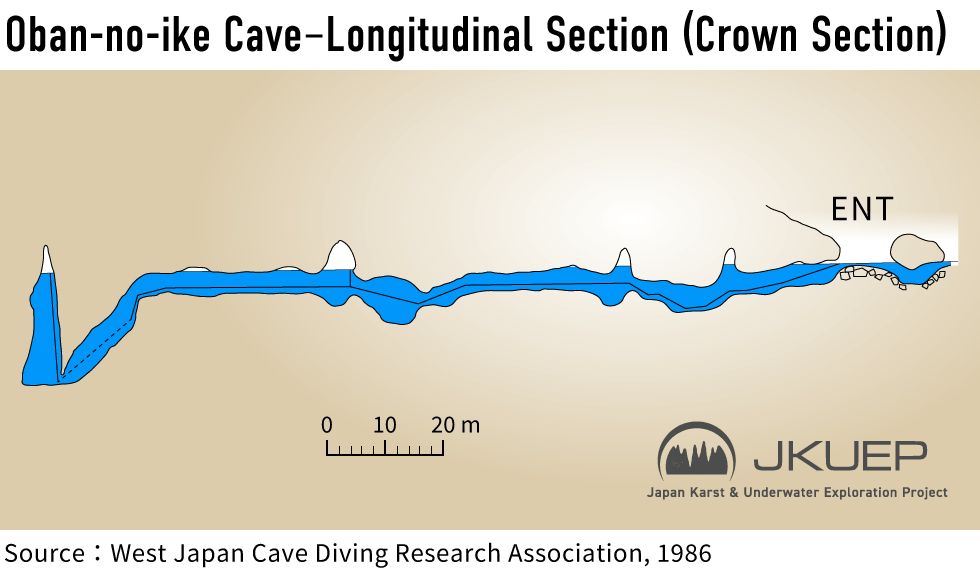
※ Cross-sectional map (up to the point reached in 1992)
At the cave of Oban-no-Ike, exploration and surveying were carried out between 1985 and 1993 by the West Japan Cave Diving Research Group and a British cave diving team invited by that group.
In 1986, an air dome located about 150 meters from the entrance was reached through the submerged section. In 1993, the invited British cave diving team is recorded as having passed that point and advanced a further roughly 200 meters. At the furthest point, they reportedly turned back where the passage dropped away like a cliff to a depth of 27 meters, and the record states that although they dived to 27 meters, they could not make out the bottom. This suggests that the passage may continue farther on.
At present, I do not yet know which water system Oban-no-Ike belongs to, so we intend to confirm that point in advance as well before drawing up an exploration plan.
The structure, formation process, and condition of the underwater section of Ryugendo are described in detail in the Ryugendo Investigation Report (March 1992) published by the West Japan Cave Diving Research Group. Referring to that report, the structure of Ryugendo from the standpoint of exploration can be outlined approximately as follows:
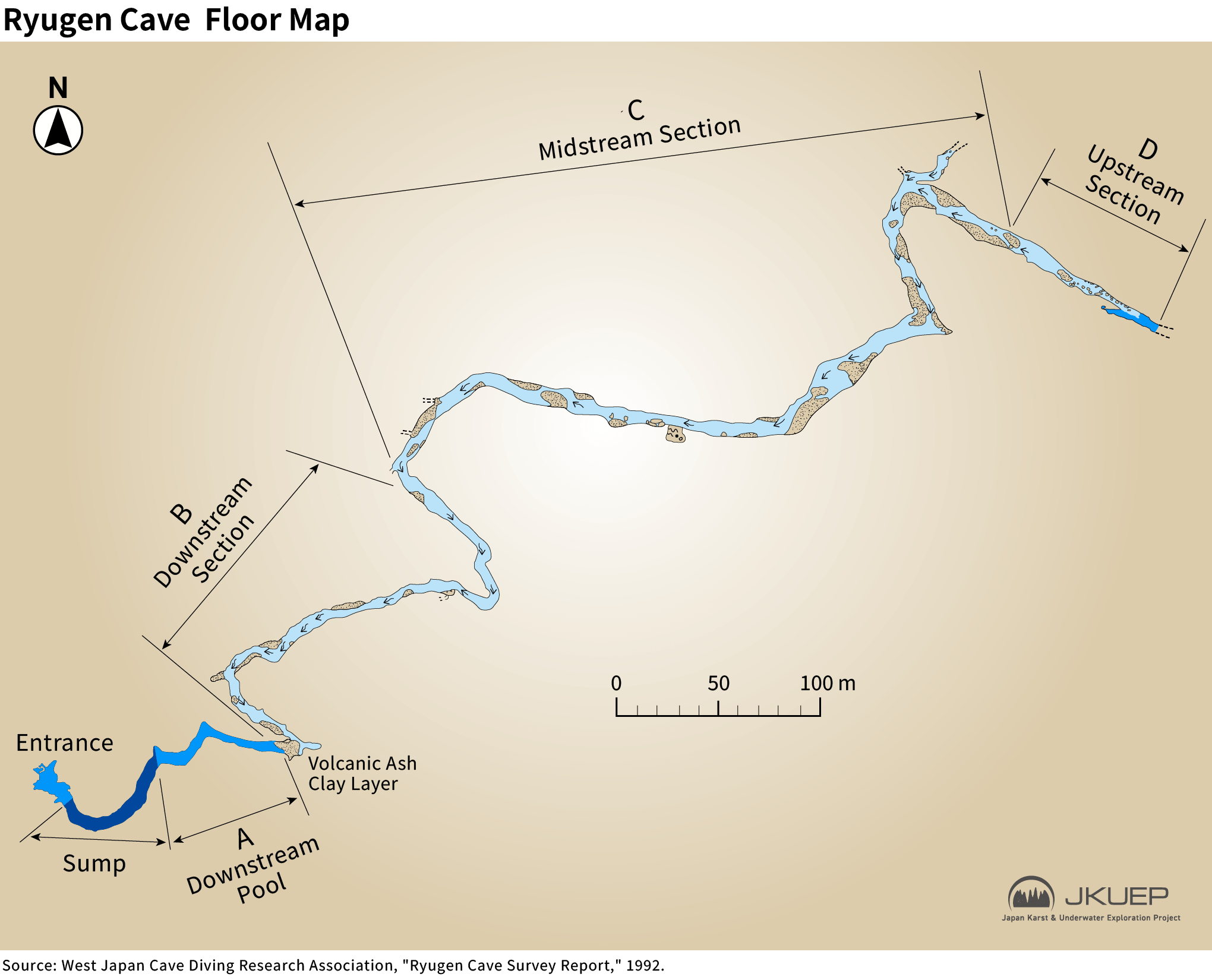
In other words, to explore the uninvestigated section, it would first be necessary to conduct about 50 to 100 meters of cave diving and then carry diving equipment, including tanks, for more than one kilometer beyond that point.
It is clear that exploration and investigation there would require extremely large-scale preparation. What makes the site worth that effort is the distance: only about 800 meters in a straight line separate the deepest point so far reached in Ryugendo from Taishodo, a nationally designated Natural Monument. In the afterword to the 1992 investigation report on Ryugendo, Shinji Sakurai cited that figure and judged that it would by no means be an unreachable distance. The same afterword also records that his one attempt to dive on from the submerged section of the upstream reach did not succeed, and that section remains unreached to this day. If a physical connection to Taishodo were successfully established by diving, the total length would exceed four kilometers, potentially making it one of Japan's largest cave systems. From an exploration standpoint, it is therefore an extremely attractive target.
As described above, exploration of the Akiyoshidai underground water system is not simply a matter of pushing further into a single cave. Rather, it will involve building up an overall picture while understanding the relationships among multiple sites. In the next exploration, we intend to intensively accumulate the basic information needed for that purpose.
Prior to the May diving exploration, a cave rescue exercise was held at Terayama-no-Ana, organized by the Rescue Section of the Speleological Society of Japan, and I took part as a member of the organizing committee. It covered the section between the cave entrance and the area where we enter the water.
The preliminary exploration had already shown that carrying an injured person out of the cave from the subterranean lake would require crossing sections with considerable elevation change, so having been able to confirm the route and the procedures for such an evacuation should feed directly into safety management in our future work.
It should be noted that this rescue exercise was organized by the Rescue Section and was not carried out as one integrated project together with our diving exploration.
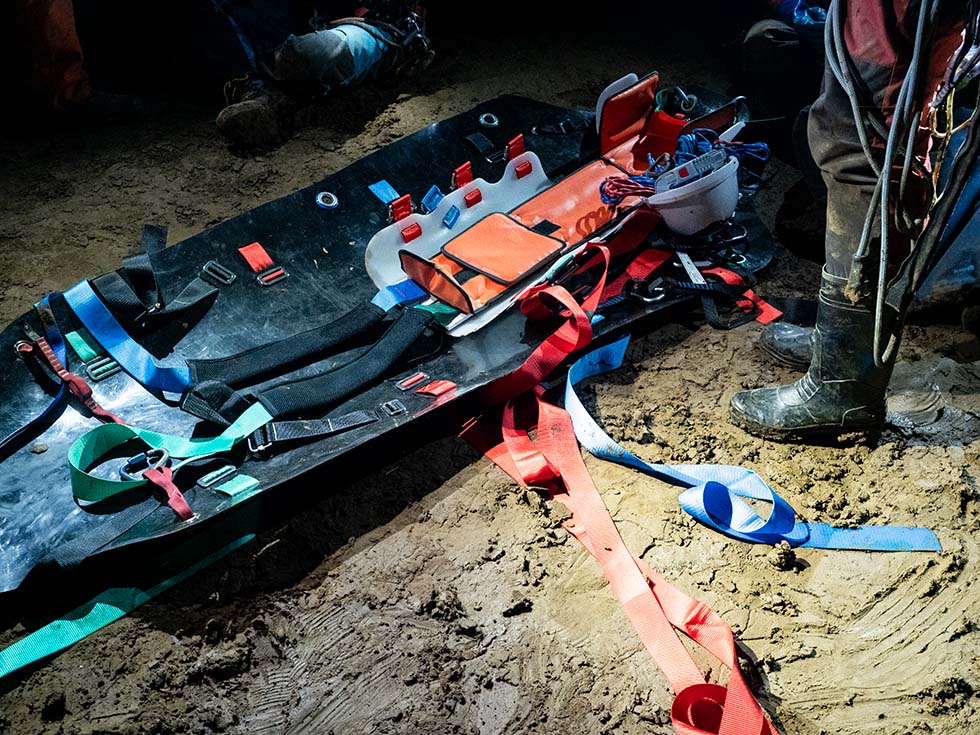
※ The cave rescue exercise at Terayama-no-Ana
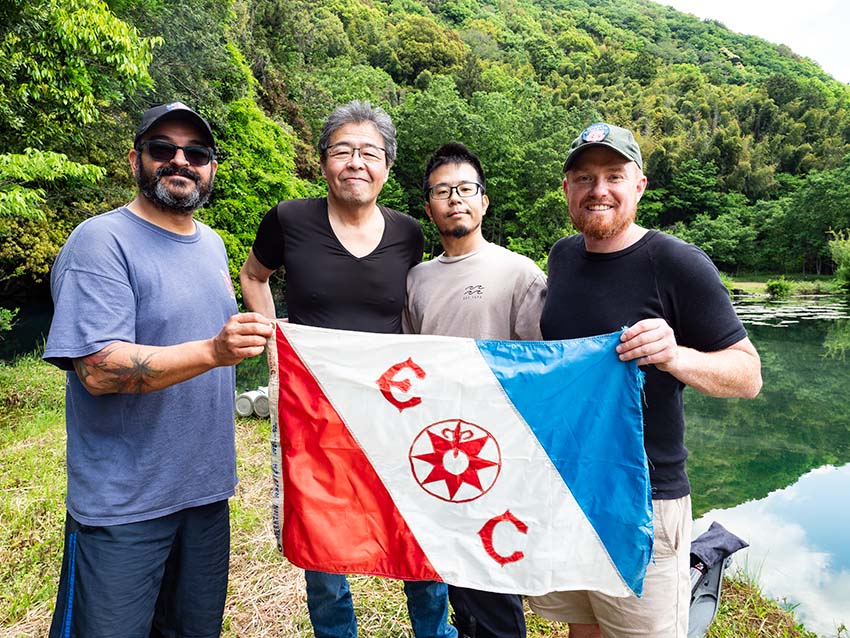
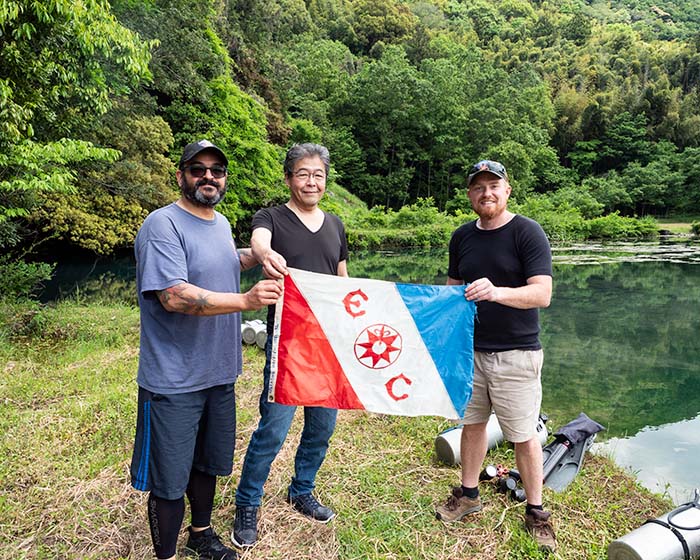
※ Holding up the flag of The Explorers Club. From left: Mr. Passos, Mr. Sakurai, Isaji, and Mr. Richards.
Following this, on May 7, 2026, we began the second diving exploration at Akiyoshidai. We dived together with Will Passos and Josh Richards, who live in Australia and carry out exploration and investigation there as well. Shortly before this exploration, on April 23, the Mine-Akiyoshidai Geopark was formally certified as a UNESCO Global Geopark. The underwater parts are also part of Akiyoshidai, and we began this work with a renewed wish to convey their appeal as well.
Mr. Richards is a member of The Explorers Club, and on this occasion he brought one of the Club's flags with him for the exploration. These flags are not mass-produced: a limited number of numbered flags have been handed down from expedition to expedition over generations.
One of them was also carried to the Moon by the astronauts of Apollo 11. Several of the historic flags are on display at the Club's headquarters in New York.
Also joining us was Mr. Shinji Sakurai, who heads the West Japan Cave Diving Research Group and who has been diving and recording the caves of Akiyoshidai since the very earliest stage. Mr. Sakurai is a pioneer who systematically dived the major underwater caves of Akiyoshidai—Shiramizu-no-Ike, Tsurube-otoshi-no-Ana (Ono no Yusen), Oban-no-Ike, Ryugendo, and Akiyoshido—during the 1980s and 1990s.
We were told that he was also the first person to dive Terayama-no-Ana. He joined us on site for the work at Shiramizu-no-Ike, and we were able to hear a great many valuable accounts from him, including stories from the formative years of cave diving in Japan.
At Terayama-no-Ana we had set the following objectives from the outset:
Of these, the connection between Pool A and Pool D had already been confirmed in the past, and the water between them was expected to be shallow.
We therefore began there, using it as a chance for Mr. Passos and Mr. Richards to get used to this environment, which they were diving for the first time.
Perhaps because of rain a few days earlier, the water was more turbid than on our previous visit, with visibility of about three meters. On the other hand, a current could be felt underwater, which had the advantage of making the flow route easier to read.
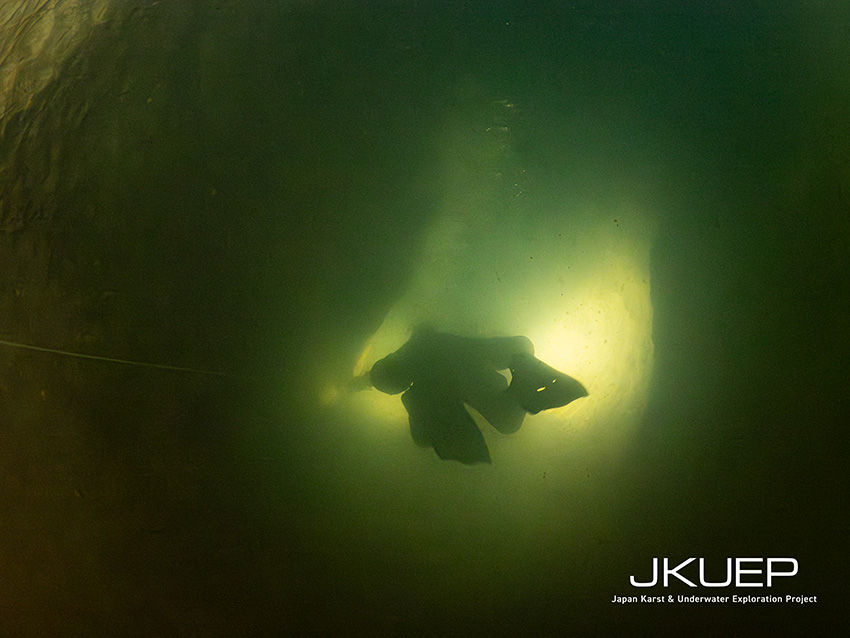
※ An impression of the visibility. To the naked eye it was somewhat worse than this.
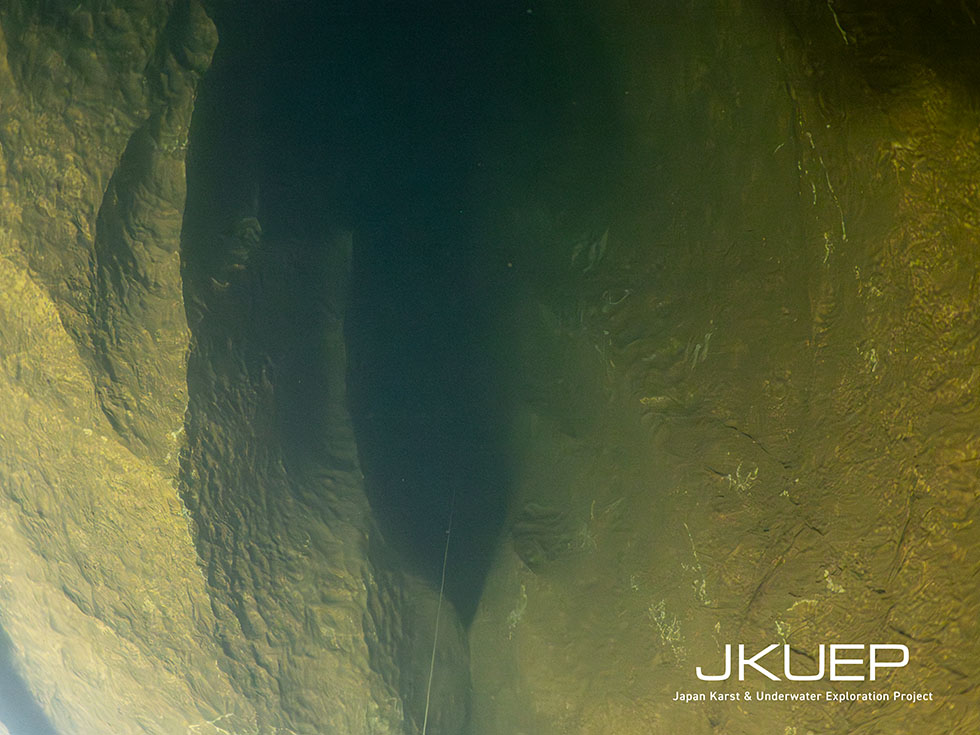
※ The flow route between Pools A and D, strongly shaped by flowing water.
There is almost no current at Pool A, our entry point, but as we entered the water and headed west we felt a current drawing us inward.
After reaching the western end and turning north, the current pushed back against us instead.
In other words, the direction of flow reverses at a point west of Pool A.
In places like this the flow often changes with the water level, so we cannot say this always holds; even so, this is also the direction from Terayama-no-Ana toward Shiramizu-no-Ike, and it was an observation that gives us reason to expect that the flow route can be established.
Next we moved on to confirming the connection between Pool A and the subterranean lake at the rear of the Third Branch. This was the place where we had turned back last time because the depth increased, so anticipating that the depth might exceed 30 meters, we prepared trimix (a breathing gas in which part of the nitrogen is replaced with helium; on this occasion 21% oxygen and 35% helium), and made ready in case decompression became necessary.
Turning south from the left end of Pool A, we photographed the banded pattern on the wall at around 20 meters—which we had been unable to photograph last time—and then headed for the deeper bottom. The passage leveled out at about 35 meters, with silt accumulated on the floor. We advanced a little farther, but the passage appeared to be blocked with silt; taking the scallops on the walls into account, we concluded that while a flow route existed here in the past, it is not the main route today.
Because confirming the blocked section took time, this dive incurred about ten minutes of decompression, which we cleared on the way back through the shallower sections. This was the only dive of the exploration that involved decompression; on the other days we dived on air or nitrox (a gas mixture with an increased proportion of oxygen).
Regarding the banded pattern on the wall, we asked several researchers on the basis of the photographs, and the prevailing opinion was that it is Microcodium limestone. We will not go into detail here, but it is something that can be identified immediately as long as a photograph exists—which shows how important it is to leave records against which a fact can be checked.
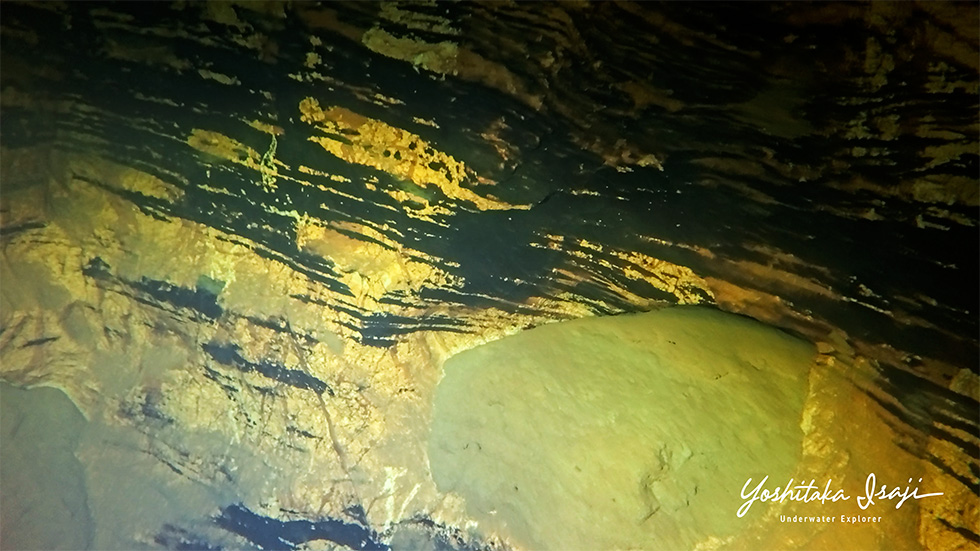
※ The banded pattern on the wall (at around 20 meters depth)
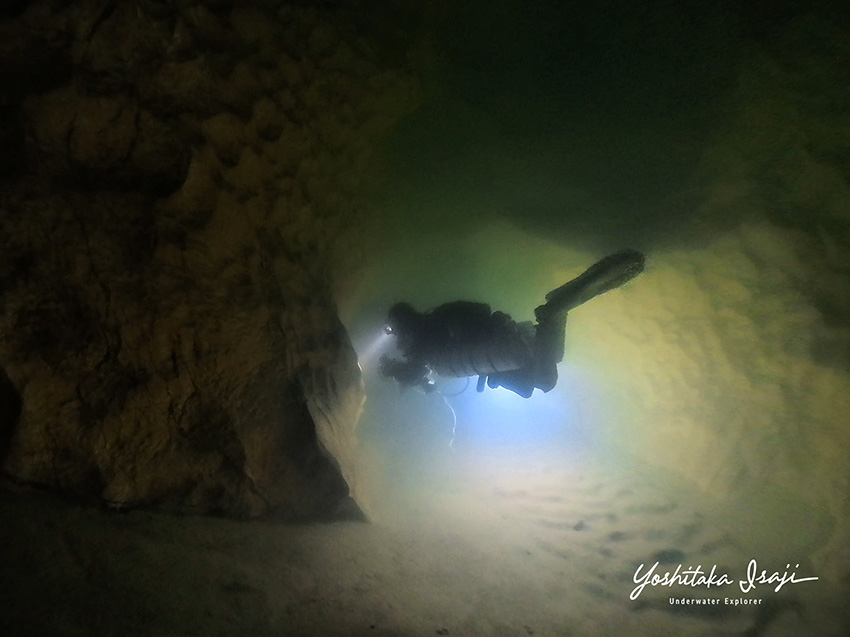
※ The far end of the passage appeared to be blocked.
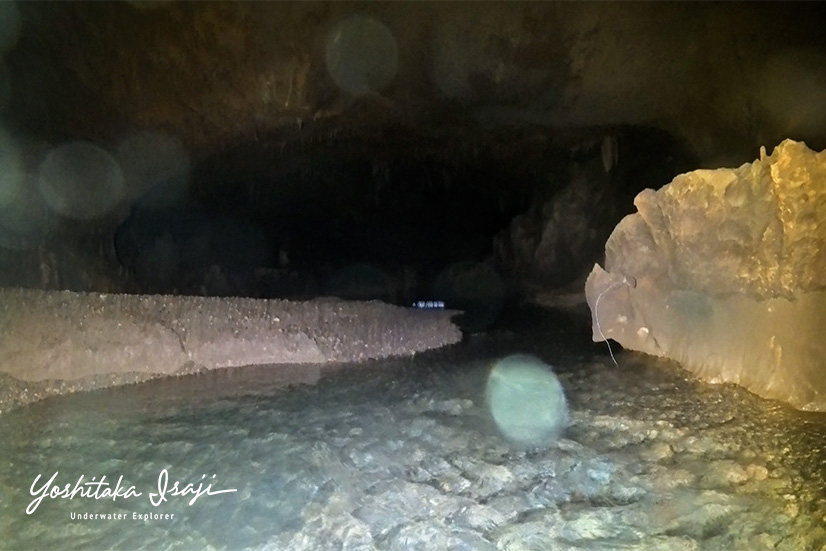
※ The water surface in the Fourth Branch of Terayama-no-Ana, where a shallow underground river continues.
Lastly at Terayama-no-Ana, we attempted the connection between Pool A and the Fourth Branch. This was less an attempt to make the connection than a search for underwater passage along the overall watercourse running from northwest to southeast.
The shortest route from Pool A toward the Fourth Branch connected immediately, but from there it left the water entirely and continued as dry passage.
We therefore turned south partway along the western passage we had been diving, and searched for a way through toward the Fourth Branch. A southward route was found, and we were able to advance a considerable distance underwater.
About 150 to 200 meters from Pool A in the direction of the Fourth Branch, the water became an underground river and grew shallow. At this point we removed the tanks we were wearing and searched the dry section, where we found scattered man-made objects left by someone who had visited this place from the dry side in the past; it seemed beyond doubt that this was somewhere within the Fourth Branch. The underground river, however, was drawn into a passage too narrow for a person, and we judged that we should compare the route we had taken against the older maps before going any farther, so we turned back.
At Terayama-no-Ana this time, we laid about 350 meters of new line, including branches. (This is an approximate figure derived from line length, not a surveyed measurement.)
After finishing our work at Terayama-no-Ana, we compared the map of the cave prepared by the Cave Research Club of Yamaguchi University with the extent we had reached. Once we had a rough idea of how the two corresponded, we drew up a simplified map including the underwater sections, to serve as a reference for future work.
If the Yamaguchi University materials are correct, it appears that we may be able to dive again from the rear of the Fourth Branch (Pool H on the new map). Beyond that point, both underwater and on land, lies ground not drawn on any existing map.
So far only our land party has reached the subterranean lake at the rear of the Third Branch, on the previous visit; we have not yet dived it. We were told that there was surface flow running from the Third Branch through to Pool D, so the connection as a water system is likely to be weak, at least outside periods of high water. Even so, which of the two—the system on the Third Branch side or that on the First Branch side—is the main route draining downstream to Shiramizu-no-Ike remains unknown. Furthermore, the subterranean lake on the Third Branch side may lie on a route leading upstream. Further investigation is needed.
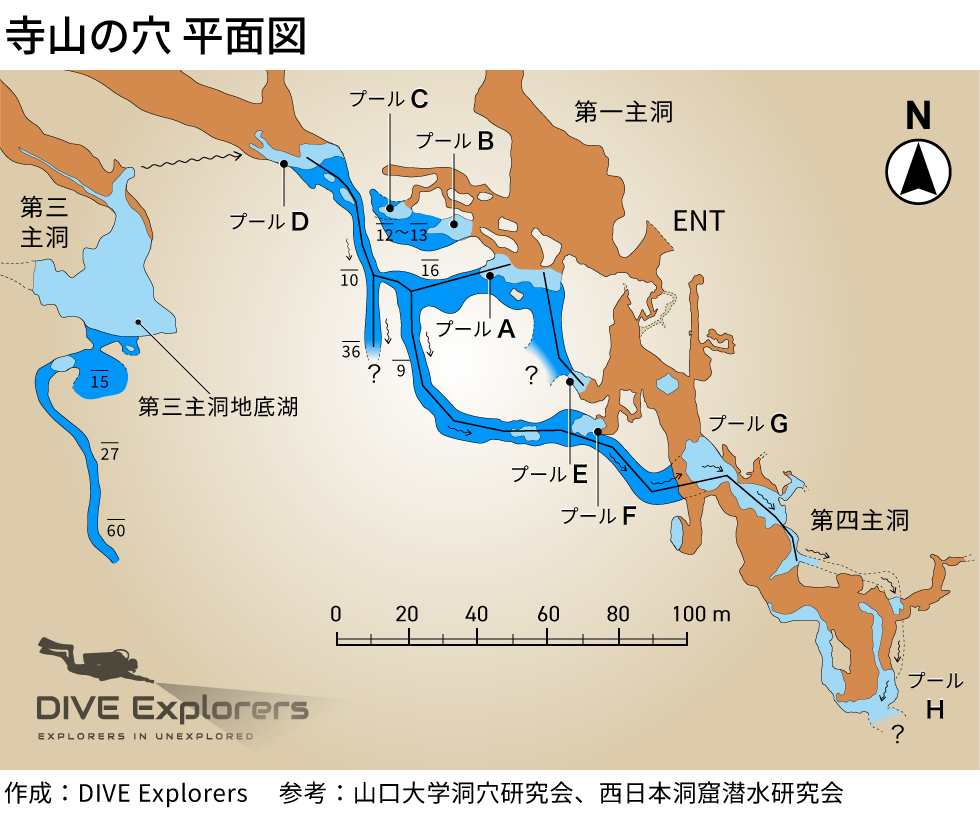
※ The map as of May 2026. Note that it is not accurate, as no instrument survey has been carried out.
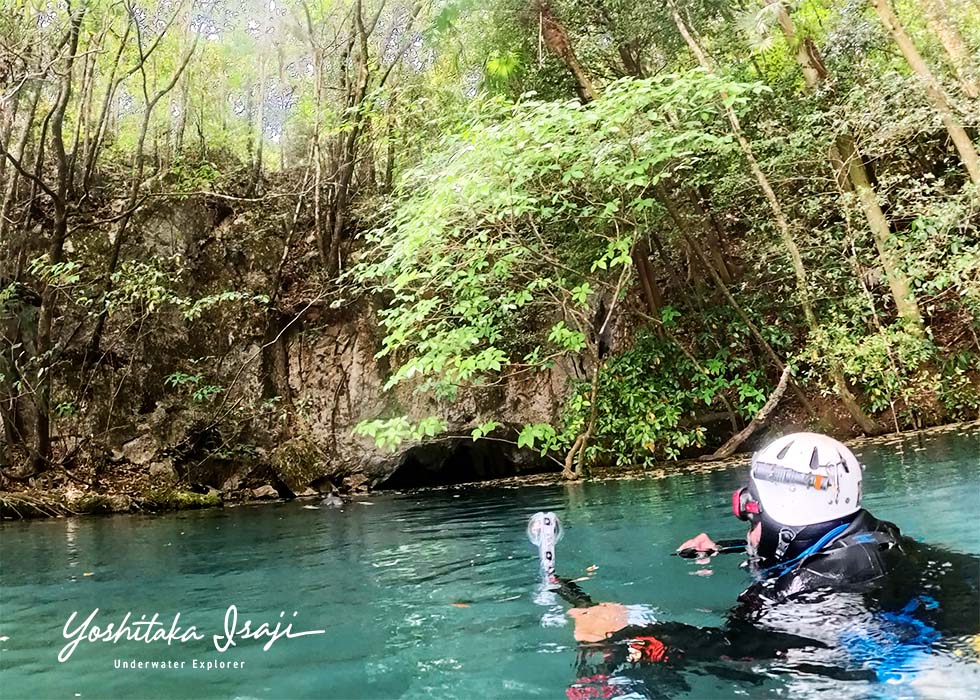
※ The entrance to the underwater cave leading on from Shiramizu-no-Ike
At Shiramizu-no-Ike, the cave has been mapped to a distance of about 300 meters from the entrance. The person who produced that underwater map is Mr. Sakurai, who headed the West Japan Cave Diving Research Group. This time, we dived that known extent carrying the underwater map he drew some forty years ago, with Mr. Sakurai himself present on site. To retrace the ground of a map in the presence of the man who drew it was, I think, about the best chance one could ask for in carrying a line of exploration forward.
We set our objectives as follows. I write "set" as though it were a simple matter, but our exchanges with the team members were also conducted in English, and these objectives were decided only after thorough advance discussion.
Underlying all of these objectives, of course, is an understanding of the underwater environment itself.
The floor of the cave leading on from Shiramizu-no-Ike is gravelly near the entrance, which suggests a steady flow. Visibility was again poor, remaining at around three meters.
The maximum depth was about ten meters, but there was considerable vertical variation, with many places where we could surface and many sections where the ceiling opened up into something like an air dome—reminiscent of an underground-river-type cave.
Along the way we kept coming across rope left from earlier work, which told us we were moving in the same direction as those earlier investigations. The very fact that it was rope, rather than the thin line used in cave diving today, seemed to speak of the era in which that exploration was carried out. We laid our own line, about 300 meters in all, including the side passages we checked. This too is an approximation, not a surveyed measurement.
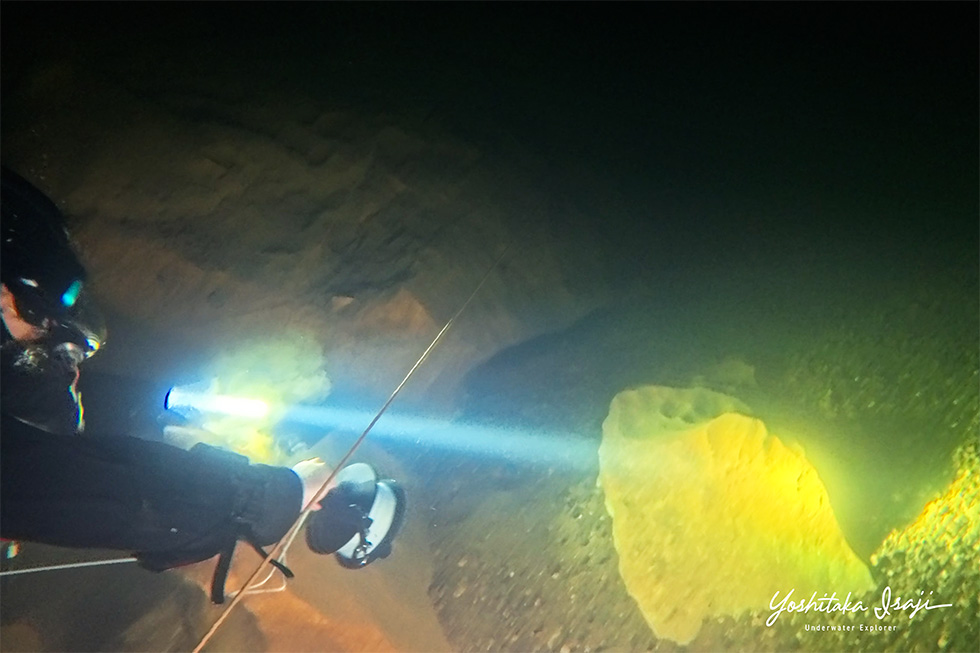
※ The gravelly bottom. Rope installed in the past can be seen.
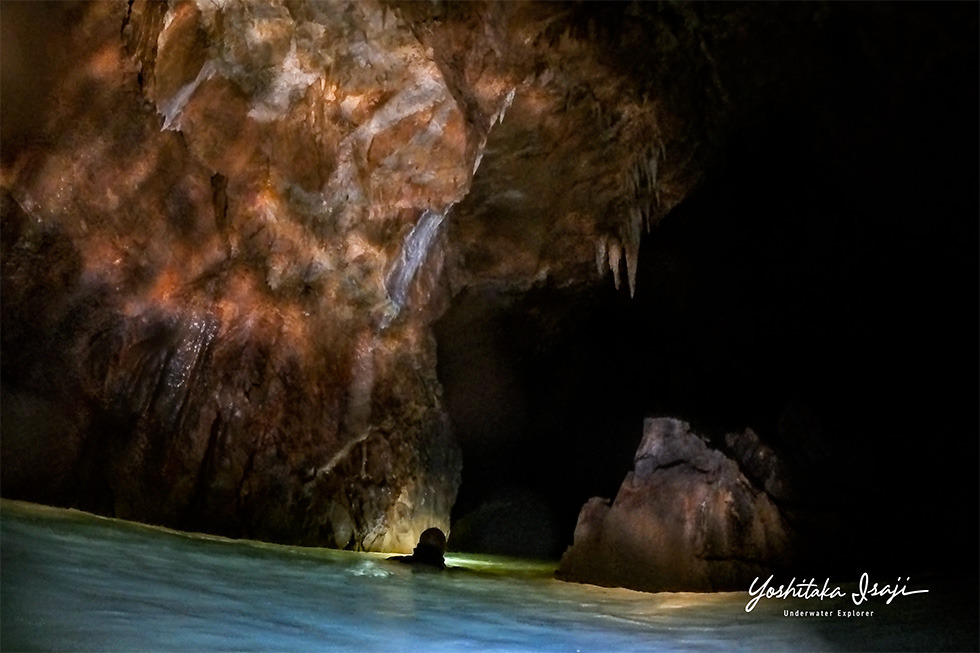
※ A large hall inside the cave at Shiramizu-no-Ike
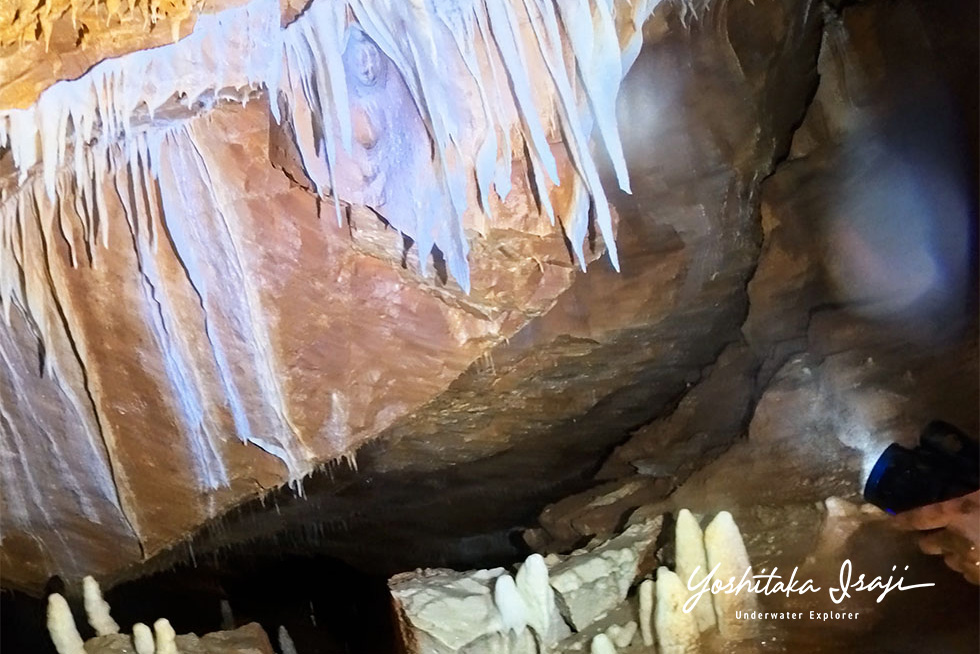
※ The pure white curtains in the dry section of the Fourth Hall
As we went on, several large halls appeared; checking our position against the map, we advanced farther and were able to reach the Fourth Hall, the furthest point recorded in earlier work.
In the dry section of the Fourth Hall there are pure white curtains—drapery-type speleothems. It is a sight reserved for those who get this far, and seeing it gave me great joy.
And there, in the dry section of the Fourth Hall, in front of the white curtains, the flag of The Explorers Club brought by Mr. Richards was raised.
The Fourth Hall itself, however, is like a subterranean lake, with no current felt at all. Beyond the Fourth Hall the passage becomes dry, but there is no further continuing passage on land, nor any sign of steady surface-water inflow.
Underwater there was one collapsed passage; the scallops observed there make it certain that water once flowed through it, but it appeared to be blocked today. We could not determine whether it is completely blocked, but judging from the amount of silt accumulation it does not appear to be the main route.
From the information and impressions gained on this dive, we believe that the flow route lies not along the route we entered this time but in another direction.
To narrow the search area, on this dive we checked the entire left-hand side of the area near the cave entrance. Next time we intend to focus on the right-hand side, in the stretch before the bottom turns silty, in the hope of finding another flow route.
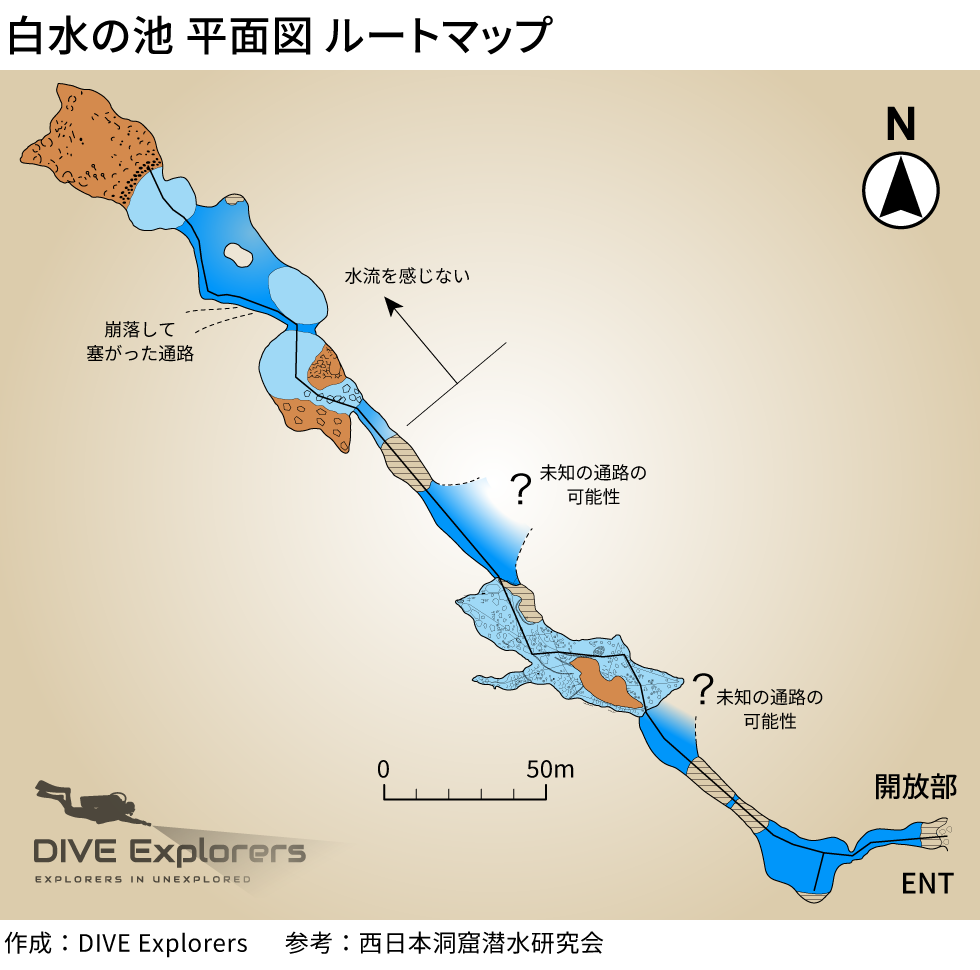
※ Outline map of Shiramizu-no-Ike
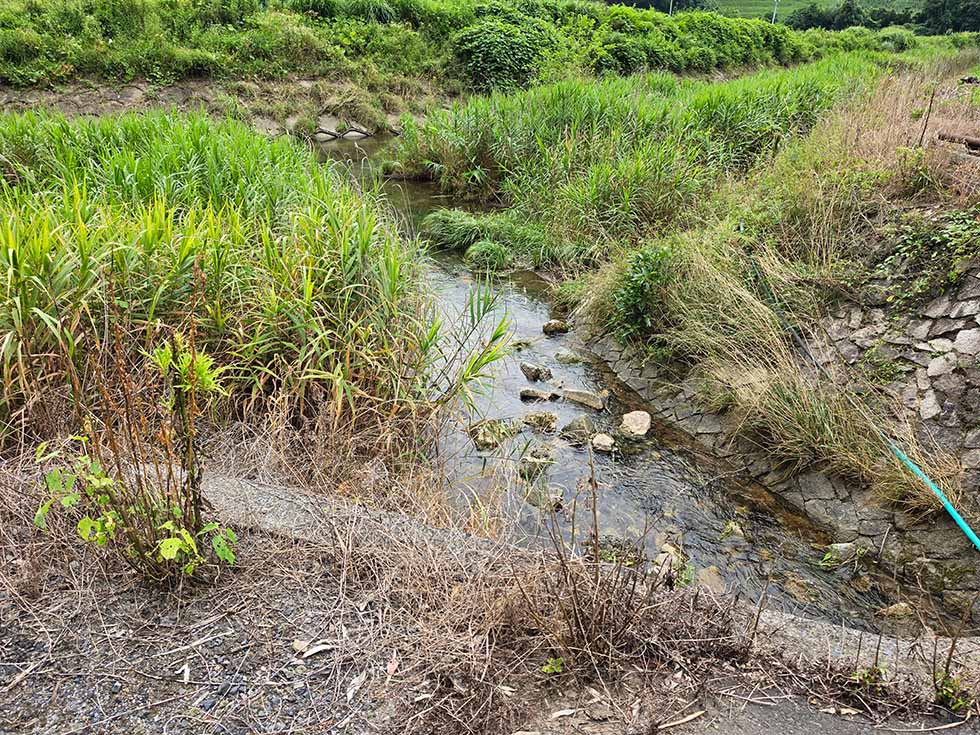
※ Water from the spring joins the river.
At Tsurube-otoshi-no-Ana (Ono no Yusen) we did not dive this time; instead we paid our respects to the head of the local district and to residents of the Ono district, and confirmed conditions on site.
This is a spring that Mr. Sakurai has dived in the past, and it is not a place where anyone should be competing to be first to enter. With Terayama-no-Ana and Shiramizu-no-Ike alone leaving us short of days, we judged that it would be better to dive here on our next visit, once we had a proper understanding of the site and had prepared accordingly.
The water of the spring joins a river downstream and flows through this district. We could see it being used as agricultural water, and it brought home to us how closely karst spring water is bound up with daily life here.
Related media coverage (About the May 2026 exploration)
With this exploration, our activity at Akiyoshidai has entered a stage in which we move beyond the extent drawn on existing maps. At Terayama-no-Ana we have seen the next entry point (Pool H) for going beyond the map, and at Shiramizu-no-Ike we came away with the sense that the main flow route lies in a direction other than the known one. I regard it as an exploration that left us with a concrete sense of what to confirm next.
We also came to think that Shiramizu-no-Ike—where preparation for diving is relatively easy, and where there are many points along the route at which an emergency ascent is possible—could serve as a place to get used to the conditions before diving elsewhere at Akiyoshidai.
We did carry out a baseline survey this time; however, the error appears to be large, and we will refrain from publishing the baseline survey drawing. Guidelines are difficult to fix to cave walls smoothed by flowing water, and we consider this the main cause of the error. Whether we can resolve it by the next exploration is not yet clear, but it is a problem that must be solved if we are to produce accurate reports.
Of the five candidate sites we listed, we were unable to enter Oban-no-Ike and Ryugendo this time. In our next exploration, in October, we intend to work on those sites together with the others.
Finally, this exploration too was made possible by the land support provided by the cavers, and by the understanding and cooperation of the landowners, the Mine City Akiyoshidai Science Museum, and everyone we contacted in the course of the work. We extend our sincere gratitude to them all.
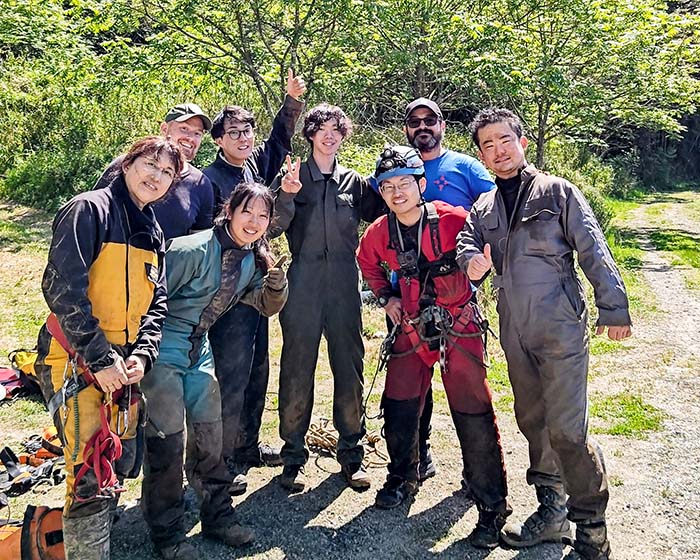
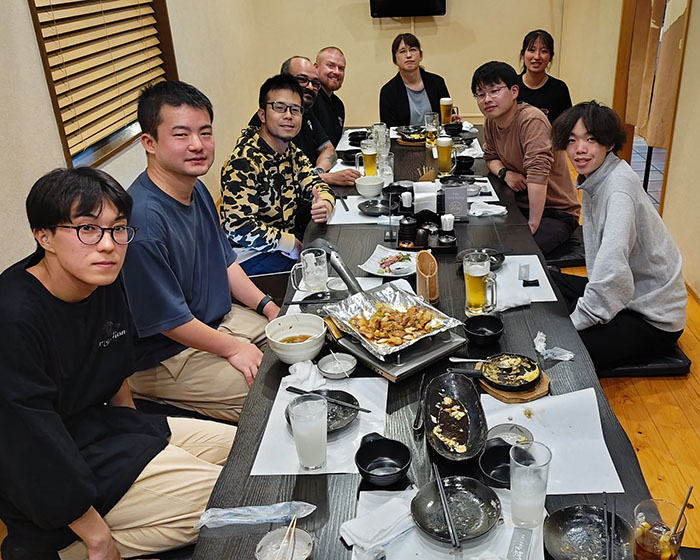
※ With the people we worked alongside this time
Akiyoshidai is one of Japan's foremost karst regions, and underwater investigation here has continued for more than sixty years.
To carry forward the accumulated research and exploration of those who came before us, and to take on the task of clarifying the whole picture with today's diving techniques and investigative methods, is a challenge that carries both great significance and great responsibility.
Since beginning exploration at Akiyoshidai, I have been contacted by several pioneers who previously carried out diving there. What impressed me most was that all of them said they were glad to see underwater exploration at Akiyoshidai moving forward again, because they had thought it might otherwise end with their own generation.
At the same time as wanting to live up to those expectations, I also felt that I should learn from their attitude. Rather than thinking, “Akiyoshidai is my field, and I do not want others to touch it,” they were simply pleased to see exploration itself continue.
Going forward, we intend to widen the scope of our work step by step, toward a full understanding of the Akiyoshidai underground water system.
Akiyoshidai is also the setting for a great deal of academic research, and to contribute to clarifying and studying its underground water system is, for me as an underwater explorer, exactly what I set out to do.
The results and data we obtain will be presented at the Mine City Akiyoshidai Science Museum and at the Speleological Society of Japan, and shared with researchers involved with Akiyoshidai, so as to contribute to continuing investigation and research.
I personally intend to report our activities and results through contributions to the Caving Journal of the Speleological Society of Japan and similar publications, so that they may support future follow-up explorations and deeper research. I believe that these efforts will also serve as one way of repaying the people who have supported this project.
Affiliations may not be up to date.
Affiliations may not be up to date.
Affiliations may not be up to date.



Copyright © 2024 Japan Karst & Underwater Exploration Project